
Main Courses
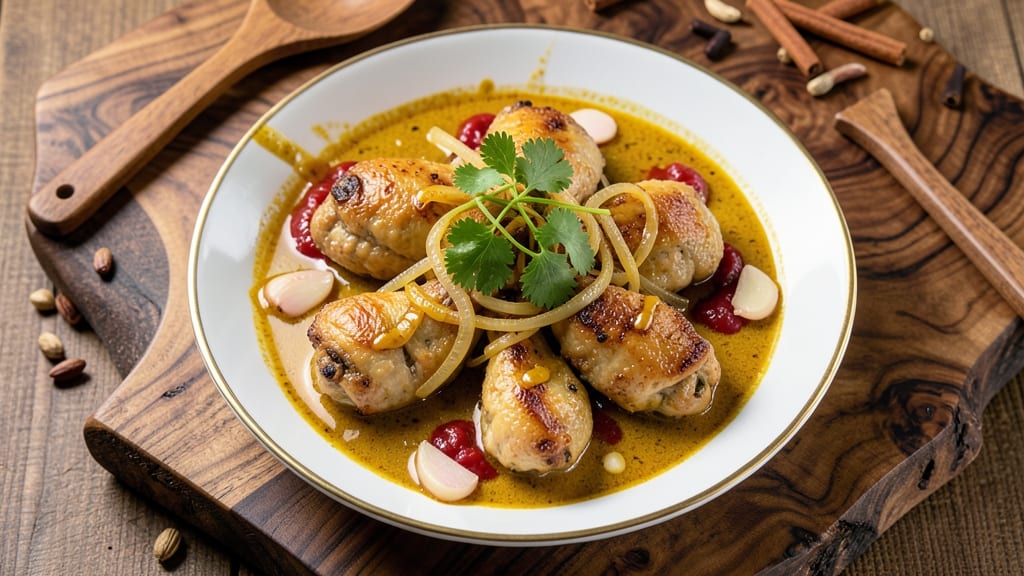
This 5-star chicken curry recipe delivers restaurant-quality depth with creamy coconut harmony and perfectly balanced spices. The secret lies in marinating the chicken overnight, allowing those aromatic spices to penetrate deeply while keeping the meat tender. I've perfected this technique over countless batches—each one richer than the last.
What sets this curry apart is the layered approach: toasted whole spices create a fragrant base, while coconut milk adds velvety richness without overpowering the bold flavors. The sauce simmers until thick and fragrant, clinging to every bite of chicken.
This isn't just another curry—it's a foolproof method that transforms simple ingredients into a dish worthy of five-star reviews.
By the time you serve it, you'll have golden-brown chicken swimming in a sauce that's creamy yet aromatic, with just the right balance of heat and sweetness. The sauce clings perfectly to each piece, delivering flavor with every bite.
Pair it with basmati rice or warm naan to complete the experience—every component designed to elevate your dinner table.
This recipe builds on years of testing, ensuring tender chicken, a perfectly balanced sauce, and restaurant-quality results at home. The techniques are straightforward but crucial for achieving that 5-star quality. Let's create a curry that will impress even the most discerning guests.
Ingredients for 5 star chicken curry
Layered spices, creamy coconut milk, and tender chicken create this restaurant-worthy curry.
| Ingredient | Amount | Notes |
|---|---|---|
| Boneless Chicken Thighs 🍗 | 1 ½ lb | Skin-on preferred for flavor |
| Coconut Milk 🥥 | 1 ½ cups | Full-fat for creaminess |
| Yellow Onion 🧅 | 1 whole | Finely diced, 1 cup yield |
| Garlic Cloves 🧄 | 6 cloves | Peeled and minced |
| Fresh Ginger 🌿 | ½ cup | Finely grated, 2-inch piece |
| Tomato Paste 🍅 | ¼ cup | Squeeze tube preferred |
| Ground Cumin 🌶️ | 1 tbsp | Toasted for depth |
| Ground Coriander 🌿 | 1 tbsp | Freshly ground preferred |
| Turmeric Powder 🌶️ | ½ tsp | Bright orange color |
| Garam Masala 🌶️ | 1 tsp | Toasted whole spices |
| Cayenne Pepper 🔥 | ¼ tsp | Adjust for heat |
| Salt 🧂 | 1 tsp | Kosher or sea salt |
| Black Pepper 🌶️ | ½ tsp | Freshly ground |
| Olive Oil 🫒 | 2 tbsp | Extra-virgin for richness |
| Fresh Cilantro 🌿 | ¼ cup | Chopped for garnish |
The chicken thighs are non-negotiable—skin-on delivers that crispy, golden finish after marinating. Look for thighs with good marbling at Whole Foods or your local butcher; they'll stay juicy through the long simmer. For the coconut milk, full-fat canned versions like Thai Kitchen or Goya provide the richest texture, but avoid brands with additives. Fresh ginger and garlic should be vibrant and firm—no wrinkly or sprouting cloves. Toast your whole spices (cumin, coriander) in a dry pan for 30 seconds before grinding—they'll develop a nutty depth that transforms this from good to extraordinary.
No fresh ginger? Powdered ginger at half the amount works, but you'll lose that bright, zesty kick. Substituting coconut milk? Heavy cream plus 1/4 cup water mimics the fat content, though the flavor won't be identical. Running low on garam masala? Mix 1/2 tsp each cumin, coriander, cinnamon, and cardamom—it's not the same, but it'll save you a trip to the store. For the tomato paste, squeeze tubes from Trader Joe's are perfect—they're concentrated and shelf-stable. And if you're avoiding cayenne, reduce the black pepper to 1/2 tsp and add a pinch of smoked paprika for warmth instead.
Marinate the chicken overnight for maximum flavor penetration, then store any leftovers in an airtight container with a thin layer of sauce to prevent drying. This curry reheats beautifully—simmer on low for 5-7 minutes until creamy again. Keeps for 4 days refrigerated or 3 months frozen, though I rarely have leftovers that last that long. For serving, warm the naan in a dry skillet for 30 seconds per side—it makes all the difference. The sauce thickens as it cools, so add 1-2 tbsp water if it seems too stiff when reheating.
Why You'll Love This Recipe
- One-Pot Magic: I swear by this recipe—just toss the chicken, onions, and spices into one pot, then let the coconut milk do the heavy lifting. No chopping mountains of veggies or juggling multiple pans here; it’s the kind of dish that makes me wonder why I ever complicated things.
- Creamy Heat Balance: That first bite? Rich, fragrant, and just spicy enough to linger without overpowering. The ginger and garlic caramelize into the coconut milk, creating this velvety depth that turns ordinary chicken thighs into something ridiculously satisfying—especially when paired with fluffy rice.
- Leftovers That Shine: Between us, this curry tastes better the next day. The flavors meld into this cozy, comforting sauce that’s perfect for lunches or freezing for lazy nights. Honestly, I’ve reheated portions for weeks and never once regretted it—proof the recipe’s actually smarter than it looks.
- Budget-Friendly Luxury: Chicken thighs and coconut milk stretch into generous servings without breaking the bank. I’ll be real: it’s the kind of meal that makes a weeknight dinner feel special without requiring a fancy grocery haul. Plus, the onion and ginger are pantry staples—minimal extra cost, maximum flavor.
Step-by-step instructions for bold spice and creamy coconut harmony
Master the technique behind restaurant-quality chicken curry with this precise, professional approach.
Sear the Chicken for Maximum Flavor
Heat a large, heavy-bottomed skillet over medium-high heat until hot. Add the 2 tablespoons olive oil and swirl to coat the pan evenly. Pat the 1.5 lb boneless chicken thighs completely dry with paper towels—this ensures a proper sear.
Working in batches if needed, add the chicken thighs to the pan, skin-side down if using skin-on. Press down gently with a spatula during the first minute to prevent curling, then flip and cook for another 3-4 minutes until golden brown on both sides. Remove and set aside—the seared chicken will release its rendered fat into the pan, forming the flavor base for your curry.
Build the Spice Base with Aromatics
In the same skillet (no need to clean it), reduce heat to medium. Add the 1 whole yellow onion and cook for 5-6 minutes until softened and translucent. Stir in the 6 cloves minced garlic and 0.5 cup finely grated ginger, cooking for another 1-2 minutes until fragrant—this is where the foundation flavors develop.
Sprinkle in the 1 tablespoon ground cumin, 1 tablespoon ground coriander, 0.5 teaspoon turmeric powder, and 0.25 teaspoon cayenne pepper. Stir constantly for 30 seconds to toast the spices and release their essential oils. This step prevents raw, bitter flavors in your finished curry.
Develop the Sauce with Tomato and Coconut
Add the 0.25 cup tomato paste and stir vigorously to incorporate into the spice mixture. Cook for 2-3 minutes until the paste darkens slightly and begins to caramelize. Pour in the 1.5 cups coconut milk and bring to a gentle simmer, stirring occasionally to prevent scorching.
Season with the 1 teaspoon salt, 0.5 teaspoon black pepper, and 1 teaspoon garam masala. Let the mixture simmer uncovered for 10 minutes—this allows the flavors to meld and the coconut milk to thicken slightly. The sauce should coat the back of a spoon but remain silky, not grainy.
Finish with Chicken and Garnish
Return the seared chicken thighs to the skillet, spooning the sauce over them to coat completely. Cover and simmer gently for 15-20 minutes, or until the chicken reaches an internal temperature of 165°F and is fork-tender. The sauce should reduce slightly, becoming rich and velvety.
Remove from heat and let rest for 5 minutes. Garnish with the 0.25 cup chopped fresh cilantro just before serving. The curry should have a vibrant orange hue from the spices, a creamy coconut texture, and tender chicken that falls apart easily. Serve immediately with basmati rice or naan for the full experience.
Pro Tips For Making 5 Star Chicken Curry
- Sear the Chicken Properly: Don’t just toss the thighs in—pat them very dry first, then sear them skin-side down in a hot pan with oil until deep golden brown (about 5-6 minutes). I used to rush this, and the curry always tasted flat; that crust locks in flavor and texture when the coconut milk hits.
- Blister the Onions First: After cooking the aromatics, pull the onions out when they’re soft but still pale, then blister them directly over the flame for 30 seconds—just until they start to char slightly. This adds a smoky depth that store-bought pastes can’t replicate. (Yes, even if you’re impatient like me.)
- Use Two Stages of Coconut Milk: Simmer the curry with full-fat coconut milk until it reduces by half, then stir in a splash of light coconut milk at the end. The first stage thickens the sauce; the second lightens it without making it greasy. I learned this the hard way after serving a curry that looked like soup.
- Salt the Chicken in Stages: Season the thighs with half the salt before searing, then finish with the rest after cooking. The initial salt helps render fat for better browning, while the second layer ensures even seasoning—no dry edges or bland spots. (Your future self will notice the difference.)
Troubleshooting great 5 star chicken curry
Sauce Too Thin?
If your sauce is watery, reduce the simmering time by 5-10 minutes uncovered—this lets the coconut milk thicken naturally. For an instant fix, mix 1 tablespoon cornstarch with 2 tablespoons cold water, stir into the sauce, and simmer for 2-3 minutes until thickened.
Avoid over-reducing, or the sauce may separate. 🌡️
Chicken Too Dry?
Overcooking is the usual culprit—chicken should reach 165°F internal temperature but stay fork-tender. If yours turns out dry, try marinating for 24 hours instead of overnight, and reduce simmering time to 10-12 minutes after adding the chicken.
For extra moisture, add 2-3 tablespoons coconut milk during the final 5 minutes of cooking.
Spices Too Overpowering?
Start by reducing cayenne to ¼ teaspoon and garam masala to ½ teaspoon. If you still need balance, stir in 1 teaspoon honey or 1 tablespoon unsweetened coconut milk to mellow the heat.
For a smoother texture, blend the sauce briefly with an immersion blender—just 10-15 seconds removes sharp edges without losing flavor.
Burnt Onions or Sauce?
Watch your heat closely—onions should cook gently over medium heat for 5-6 minutes, never browning. If the sauce starts to stick, immediately add 1-2 tablespoons water and stir. For burnt flavors, scrape the pan clean and start fresh with 1 tablespoon olive oil and the onions.
A nonstick skillet helps prevent sticking, but cast iron adds depth to the flavor.
Lacking Creaminess?
Full-fat coconut milk is key—avoid light versions. If your sauce still feels thin, stir in 2 tablespoons Greek yogurt or 1 tablespoon heavy cream at the end for richness.
For extra body, simmer the sauce longer (15-20 minutes) uncovered to reduce moisture. A splash of coconut cream (thicker than milk) also works wonders.
Sauce Separating?
This happens when coconut milk breaks down from high heat or acidic ingredients. Stir in 1 tablespoon tomato paste or ½ teaspoon arrowroot powder mixed with water, then simmer for 2-3 minutes.
For prevention, keep the sauce at a gentle simmer (medium-low heat) and avoid rapid temperature changes. A slow cooker on low heat can also help maintain consistency.
Nutrition facts
Frequently asked questions
Can I use chicken breast instead of thighs?
Chicken breast works but requires extra care. Use 1.5 lb boneless, skinless breasts, pound them to an even thickness, and marinate for 4-6 hours max (not overnight) to prevent drying. Cook at medium-low heat for 12-15 minutes after adding to sauce, checking doneness at 165°F. For best results, add 2 tbsp coconut milk during final 5 minutes to restore moisture.
How do I make this curry spicier?
Boost heat by adding ½ teaspoon extra cayenne during spice toasting, or stir in 1 teaspoon red chili flakes with the garam masala. For depth, include 1 minced bird's eye chili with the garlic and ginger. Finish with 1 teaspoon lime juice to brighten flavors—this enhances perceived spice without adding more heat. Adjust gradually to avoid overwhelming the creamy coconut base.
Can I prepare this curry in a slow cooker?
Sear the chicken first, then transfer everything to the slow cooker. Cook on low for 4-5 hours or high for 2-3 hours, adding 2 tbsp water if needed. The sauce will thicken naturally. For extra richness, stir in 2 tbsp coconut cream during the last 30 minutes. This method works especially well for busy weeknights.
What's the best way to store leftovers?
Let the curry cool completely, then store in an airtight container with a thin layer of sauce over the chicken to prevent drying. Keeps in the fridge for 4 days or freeze for 3 months. To reheat, simmer on low heat for 5-7 minutes with 2 tbsp water to restore creaminess. For microwave reheating, cover with a damp paper towel and heat in 1-minute intervals.
Can I make this curry dairy-free?
Yes! Simply replace the 1.5 cups coconut milk with 1 cup full-fat coconut milk + ½ cup unsweetened almond milk. For extra richness, use ½ cup coconut cream instead. The texture remains creamy while keeping it completely dairy-free. Check other ingredients (like garam masala) for hidden dairy—some blends contain milk powder.