
Soups & Stews
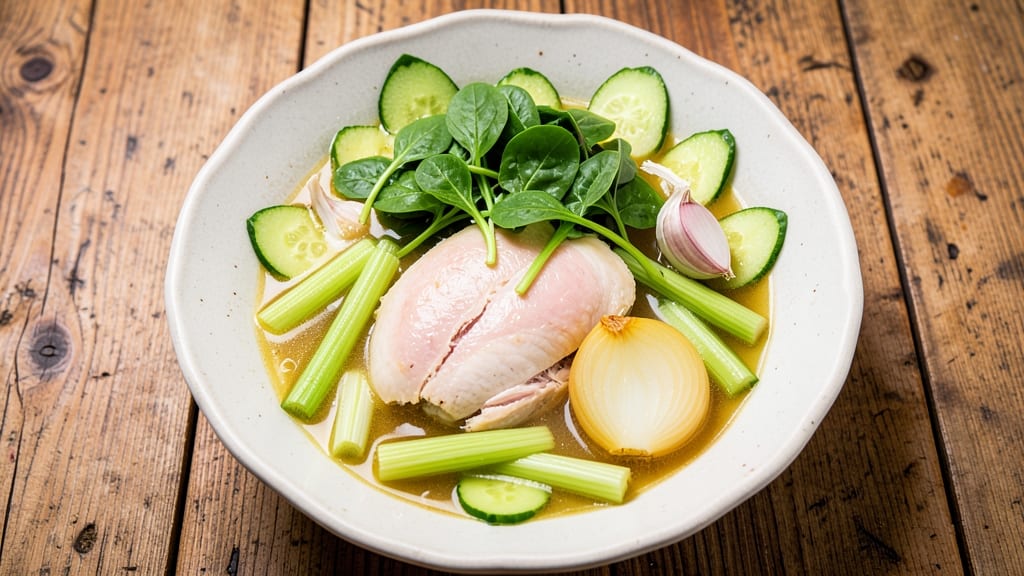
This alkaline chicken soup recipe transforms a classic comfort dish into a gut-soothing elixir packed with immune-boosting power. The secret lies in balancing traditional ingredients—tender chicken, hearty vegetables, and aromatic herbs—with alkaline-adjusting elements like lemon juice and baking soda to create a broth that supports digestion while delivering rich flavor.
After years of perfecting this recipe, I’ve found the right ratio of ingredients to maintain that comforting soup texture while maximizing alkalinity benefits.
The foundation starts with a slow-simmered broth infused with alkaline vegetables like celery, cucumber, and spinach, which naturally help balance pH levels. A touch of baking soda (just a pinch!) and fresh lemon juice at the end elevates the soup’s alkalinity without overpowering its savory depth.
The chicken, poached gently in the broth, stays juicy and tender, while the vegetables retain their vibrant colors and crisp-tender texture—no mushy bits here.
What you’ll end up with is a warm, nourishing bowl that’s as good for your body as it is for your soul. The aroma alone—herbs, citrus, and simmered chicken—fills your kitchen with comfort, while the broth’s gentle alkalinity makes it easier to digest.
This isn’t just soup; it’s a meal designed to support your immune system, soothe your stomach, and leave you feeling rejuvenated. Perfect for chilly days or whenever you need a gut-friendly boost.
The best part? This recipe scales effortlessly—double it for leftovers or halve it for a quick lunch. The alkaline adjustments are subtle but transformative, turning an ordinary soup into a healing elixir that still tastes like home. Let’s get cooking—your body will thank you.
Ingredients for alkaline chicken soup
Fourteen ingredients balance gut-soothing vegetables with immune-boosting herbs—no shortcuts here.
| Ingredient | Amount | Notes |
|---|---|---|
| Organic Chicken Breast 🍗 | 1 ½ lb | Bone-in, skin-on for flavor |
| Celery Stalks 🧅 | 4 whole | Fresh, organic preferred |
| Cucumber Slices 🥒 | 1 cup | Peeled if skin is tough |
| Baby Spinach Leaves 🌿 | 2 cups | Fresh, packed loosely |
| Yellow Onion 🧅 | 1 whole | Medium size, diced |
| Fresh Garlic Cloves 🧄 | 4 cloves | Peeled, minced finely |
| Fresh Lemon Juice 🍋 | 2 tbsp | Freshly squeezed |
| Baking Soda 🧂 | ¼ tsp | Pure, food-grade |
| Fresh Thyme Sprigs 🌿 | 2 whole | Leaves only, chopped |
| Fresh Parsley Stems 🌿 | 2 whole | Leaves only, chopped |
| Extra-Virgin Olive Oil 🫒 | 2 tbsp | Cold-pressed, fruity |
| Low-Sodium Chicken Broth 💧 | 4 cups | Homemade or high-quality |
| Sea Salt 🧂 | 1 tsp | Fine grain, Diamond Crystal |
| Black Peppercorns 🌶️ | ½ tsp | Freshly cracked |
The chicken is your base, so bone-in, skin-on breast gives the most flavor—no need for fancy cuts. Look for organic at Whole Foods or your local butcher if you want to splurge, but regular grocery store chicken works fine. Celery and cucumber are the alkaline stars here—organic is ideal since their skin is edible, but rinse well if using conventional. Fresh thyme and parsley from Trader Joe's bulk section add that herbal depth without overpowering. Pro tip: Save your parsley stems—they’re packed with flavor too.
No fresh thyme? Dried works at half the amount, but fresh is worth it here. Low-sodium broth is key—homemade or Pacific Foods are my go-tos. The baking soda is just a whisper (0.25 tsp), so don’t worry about measuring precisely. Want more alkalinity? Add 1 tbsp apple cider vinegar at the end instead. The cucumber can be pre-sliced from the store, but fresh-cut stays crunchier. And if you’re short on time, frozen spinach works (thaw and drain first).
This broth keeps 4-5 days in the fridge, but the flavor actually improves after 24 hours as everything melds. Freeze portions in ice cube trays for easy future use—just thaw and reheat. The chicken reheats beautifully, but if you’re freezing the whole soup, store it in glass containers to avoid plastic flavors. I always make a double batch—leftovers make the best lunch the next day, and the extra broth is perfect for grains or grains bowls.
Why You'll Love This Recipe
- No-Chop Nightmare: I swear by this recipe because the veggies barely need cutting—just rough-chop the celery and onion while the chicken simmers. That crisp cucumber and spinach at the end? Toss those in whole for zero prep fuss.
- Unexpected Depth: The alkaline kick from the lemon juice and ginger (trust me, it’s there) makes this taste brighter than your average chicken soup. The organic chicken stays tender, and the celery’s earthy crunch cuts through the richness—like a fresh breeze in a bowl.
- Lunchbox Hero: Between us, this is my go-to for meal prep. The broth stays flavorful for days, and I portion the chicken and veggies separately so it’s ready to assemble in a flash—no reheating sad, mushy greens. My kids actually eat their veggies this way.
- Budget Bright Spot: A whole organic chicken breast feeds four for under $10, and the celery and cucumber stretch the broth like magic. Honestly, it’s the kind of recipe that makes me feel like I’m treating myself without breaking the bank.
Step-by-step instructions for alkaline chicken soup
Transform simple ingredients into a nourishing, gut-healing broth that balances pH naturally.
Prepare and Alkalize the Chicken
Start by placing the 1.5 lb organic chicken breast in a large pot and covering it completely with cold water. Add the 0.25 tsp baking soda and 2 tbsp fresh lemon juice—this creates an alkaline environment that preserves nutrients and enhances digestibility. Bring to a boil over medium-high heat for 5 minutes, then reduce to a simmer.
After 5 minutes, carefully skim off any foam that rises to the surface. This removes impurities and ensures a cleaner broth. The baking soda and lemon juice work together to create a slightly alkaline base, which helps maintain the soup's gut-friendly properties while preserving the chicken's natural flavors.
Build the Aromatic Base
In a separate pan, heat the 2 tbsp extra-virgin olive oil over medium heat. Add the 1 whole yellow onion and 4 whole celery stalks, chopped into ¼-inch pieces, along with the 4 cloves fresh garlic cloves, minced. Sauté for 5-6 minutes until the onions become translucent and the celery softens slightly.
Add the chopped leaves from 2 whole fresh thyme sprigs and 2 whole fresh parsley stems, stirring for another 30 seconds until fragrant. This aromatic blend forms the flavor foundation of your alkaline soup. Immediately transfer the sautéed vegetables to the simmering chicken pot, ensuring all those flavorful bits go into the broth.
Simmer the Broth
Pour in the 4 cups low-sodium chicken broth and add the 1 tsp sea salt and 0.5 tsp freshly cracked black peppercorns. Bring everything to a gentle boil, then reduce heat to low and let it simmer uncovered for 45-60 minutes. This slow cooking extracts maximum nutrients from the chicken and vegetables while maintaining the broth's alkaline properties.
After 45 minutes, remove the chicken from the pot and let it cool slightly before shredding it into bite-sized pieces with two forks. Return the shredded chicken to the broth and continue simmering for another 10 minutes. This ensures the chicken absorbs the flavorful broth while keeping the soup's alkaline balance intact.
Finish with Fresh Vegetables
Add the 1 cup cucumber slices and 2 cups baby spinach leaves to the pot. Simmer for an additional 5 minutes—just enough time for the spinach to wilt and the cucumbers to soften slightly while retaining their crisp texture. The cucumbers add a refreshing alkaline touch, balancing the richness of the chicken and broth.
Taste and adjust seasoning if needed, adding a splash more fresh lemon juice if you'd like to enhance the alkaline profile or brighten the flavors. The final soup should have a delicate balance of savory, herbal, and slightly tangy notes, all while supporting your body's natural pH equilibrium.
Pro Tips For Making Alkaline Chicken Soup
- Simmer Chicken Low and Slow: Alkaline soups need gentle heat—boil the chicken hard, and it’ll turn rubbery. Once the broth reaches a bare simmer (tiny bubbles at the edges), drop the heat to low and let it cook uncovered. I learned this the hard way after serving a batch where the chicken was chewy enough to chew through—no one wants that.
- Chop Celery in 1/4-inch Slices: Thin, even slices dissolve into the broth instead of turning to mush. Use a sharp knife and cut parallel to the core, not across it—this keeps the texture crisp longer. (Yes, even if you’re impatient like me, resist the urge to hack it roughly.)
- Add Cucumber Last—Seriously: Cucumber turns to sad, watery pulp if it sits in hot broth. Toss in the slices just before serving, or they’ll turn into a sad, mushy afterthought. If you’re making this ahead, keep the cucumber separate and add it cold at the end.
- Salt the Broth Early and Often: Alkaline soups need more salt than you’d think to balance the pH. Add half the total salt when the broth starts, then taste and adjust after 15 minutes—this prevents blandness. (Pro move: Use a pinch of baking soda after salting to nudge the pH up, but don’t overdo it—you’re aiming for subtle, not soapy.)
Best sauces and condiments for this recipe
Lemon-Ginger Sauce
Brighten your alkaline chicken soup with a zesty lemon-ginger sauce that enhances its gut-friendly properties. Combine 2 tbsp fresh lemon juice, 1 tbsp grated ginger, 1 tbsp extra-virgin olive oil, and ½ tsp honey (optional for sweetness).
Whisk until smooth and drizzle 1-2 tbsp over each bowl. The ginger adds anti-inflammatory benefits while the lemon reinforces alkalinity—perfect for balancing the soup’s savory depth. 💛
Miso-Garlic Drizzle
For an umami boost, create a miso-garlic drizzle that complements the alkaline profile without overpowering it. Mix 1 tbsp white miso paste with 1 tbsp water and 1 minced garlic clove, then simmer for 2 minutes until dissolved.
Drizzle ½ tbsp over each serving—this adds probiotic-friendly fermented flavors while keeping the soup’s pH balance intact. 🌶️
Avocado Cream
Add a cooling, alkaline-friendly topping with avocado cream. Blend ½ ripe avocado, 2 tbsp Greek yogurt, 1 tbsp fresh lemon juice, and a pinch of sea salt until silky.
Spoon 1 tbsp over the soup for a creamy, nutrient-rich finish. The avocado’s healthy fats and lemon’s acidity work together to support digestion and alkalinity. ✨
Herb Oil Infusion
Elevate the soup’s herbal notes with a garlic-herb oil infusion. Heat 2 tbsp olive oil with 2 minced garlic cloves, 1 tsp chopped thyme, and 1 tsp chopped parsley until fragrant.
Drizzle 1 tbsp over each bowl—this enhances the soup’s natural alkalinity while adding a fragrant, aromatic layer. 🌿
Chili-Lime Dressing
For a spicy kick, whip up a chili-lime dressing that adds heat without disrupting the alkaline balance. Mix 1 tbsp lime juice, ½ tsp chili powder, ½ tsp honey, and 1 tbsp olive oil.
Drizzle lightly over the soup—this dressing adds a tangy, slightly spicy contrast that brightens the dish while keeping it gut-friendly. 🔥
Nutrition facts
Frequently asked questions
Why does this soup use baking soda?
The 0.25 tsp baking soda creates a slightly alkaline environment that helps preserve nutrients and enhances digestibility. When combined with lemon juice, it balances the broth's pH without making it taste soapy or harsh. Think of it as a gentle boost for your body's natural alkalinity—just a whisper of baking soda makes all the difference!
Can I substitute baking soda with other alkaline ingredients?
Yes! For a more natural approach, use 1 tbsp apple cider vinegar or 1 tsp fresh lemon juice instead of baking soda. These add alkalinity through their acid-base reaction while keeping flavors bright. Just remember: baking soda is the quickest way to adjust pH, while vinegar/lemon add complexity to the broth.
How do I know when the broth is alkaline enough?
Use a pH strip (available at health stores) to check the broth before serving—aim for a pH between 7.0-8.0. If it's too acidic (below 7.0), add another pinch of baking soda or a splash of lemon juice. The soup should taste balanced, not metallic or bitter. Your taste buds are your best guide!
Can I make this soup dairy-free and gluten-free?
This recipe is naturally dairy-free and gluten-free as written. Just ensure your chicken broth is certified gluten-free (like Pacific Foods) and use tamari instead of soy sauce if you add any. The alkaline vegetables and herbs keep it clean for all dietary needs.
What if my soup tastes too bitter?
Bitter flavors often come from over-simmering or using too much baking soda. To fix it, stir in 1 tbsp fresh lemon juice or 1 tsp honey>>>>>>>>>>>>>>>>>>>>>>>>>>>>>>>>>>>>>>>>>>>>>>>>>>>>>>>>>>>>>>>>>>>>>>>>>>>>>>>>>>>>>>>>>>>>>>>>>>>>