
Sauces & Condiments
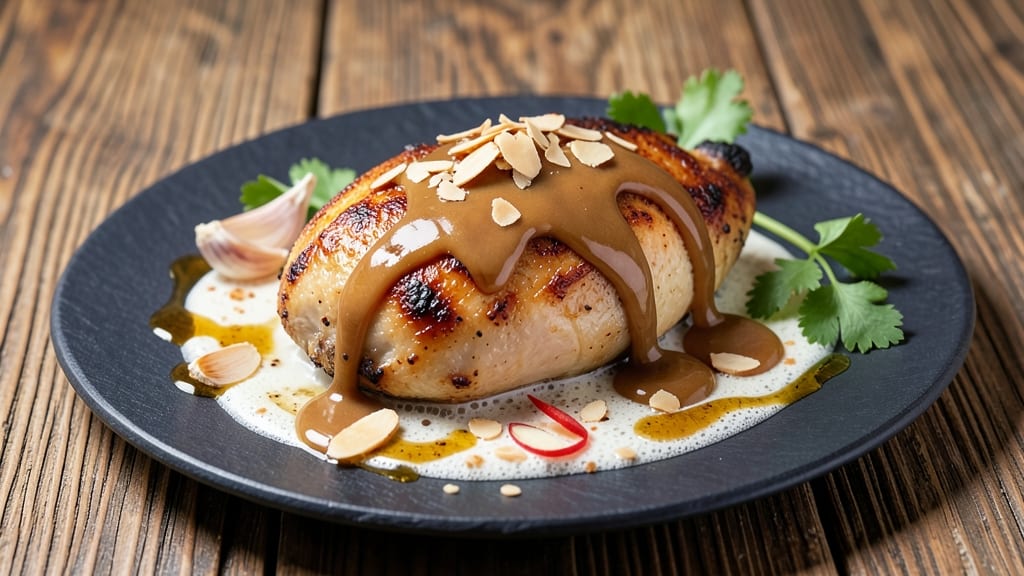
This almond boneless chicken sauce recipe transforms simple ingredients into a rich, nutty glaze that clings perfectly to tender chicken. The secret lies in blending toasted almonds with warm spices and coconut milk for a velvety finish—no heavy cream required.
I developed this dish after craving a lighter alternative to traditional creamy sauces, and it delivers restaurant-quality results with minimal effort.
The beauty of this recipe is its one-pan simplicity: boneless chicken thighs marinate in a fragrant blend of garlic, ginger, and almond butter before baking in the sauce itself. No separate pots, no messy cleanup—just 30 minutes of hands-off cooking time.
The almond base adds depth without overpowering the chicken's natural flavor, while a touch of honey balances the richness.
By the time you serve it, you'll have golden-brown chicken swimming in a glossy, creamy almond sauce that's both elegant and approachable. The sauce thickens beautifully as it bakes, creating a perfect ratio of sauce to chicken that's ideal for weeknight dinners or special occasions.
Serve with steamed jasmine rice or roasted vegetables to complete the meal.
What makes this recipe stand out is its versatility—use it as a standalone dish or pair it with complementary sides like roasted asparagus or a simple arugula salad. The nutty, slightly sweet sauce pairs wonderfully with bright flavors, making it adaptable for any table setting. Let's get started!
Ingredients for almond boneless chicken sauce
Simple ingredients transform into a velvety almond-coconut sauce that elevates boneless chicken with minimal effort.
| Ingredient | Amount | Notes |
|---|---|---|
| Boneless Chicken Thighs 🍗 | 1 ½ lb | Skinless, trimmed of excess fat |
| Almond Butter 🥜 | ½ cup | Natural, unsweetened variety |
| Coconut Milk 🥥 | 13 ½ oz | Full-fat canned variety |
| Garlic Cloves 🧄 | 4 cloves | Minced for marinade |
| Fresh Ginger 🌿 | 1 tbsp | Finely grated, fresh preferred |
| Honey 🍯 | 2 tbsp | Wildflower or clover variety |
| Soy Sauce 🍶 | 2 tbsp | Low-sodium preferred |
| Toasted Almond Slices 🥜 | ¼ cup | For garnish, lightly toasted |
| Ground Cinnamon 🌶️ | ¼ tsp | For warm spice depth |
| Ground Coriander 🌿 | ¼ tsp | For earthy complexity |
| Salt 🧂 | ¾ tsp | Diamond Crystal kosher |
| Black Pepper 🌶️ | ¼ tsp | Freshly cracked |
| Olive Oil 🫒 | 1 tbsp | Extra-virgin for marinade |
The almond butter forms the sauce's rich foundation—store-bought natural varieties work best, but homemade (just blend raw almonds) adds even deeper flavor. Trader Joe's and Whole Foods carry excellent options, or check the bulk section for almond butter without additives. For the coconut milk, full-fat canned versions create the creamiest texture; brands like Thai Kitchen or Goya are reliable. Toast your almond slices in a dry pan for 2-3 minutes—their nutty aroma enhances the dish's aroma when garnishing. Fresh ginger and garlic should be vibrant; bruised or discolored ginger indicates age and weaker flavor.
No almond butter? Cashew butter or tahini work as substitutes, though the flavor profile shifts slightly. Running low on coconut milk? Substitute with equal parts heavy cream and a splash of almond milk, but expect a lighter texture. For honey, maple syrup or agave provide similar sweetness, though honey's floral notes are ideal here. The toasted almond garnish isn't just decorative—it adds crunch and amplifies the almond flavor. If you're avoiding nuts entirely, toasted pumpkin seeds offer a neutral alternative. The soy sauce adds umami depth; tamari works for gluten-free adaptations. Always use freshly ground spices—their aroma fades dramatically after 3 months.
This sauce keeps beautifully in the fridge for 5 days, though it tastes even better the next day as flavors meld. For longer storage, freeze portions in airtight containers for up to 3 months
Why You'll Love This Recipe
- No Pantry Overload: I swear by this recipe because it only needs five things you might already have. That jar of almond butter gathering dust? The can of coconut milk you bought for smoothies? They’re the secret weapons here—no random spices or obscure ingredients to hunt down.
- Rich Without the Guilt: The almond butter and coconut milk team up to create a sauce so velvety it’ll fool you into thinking it’s restaurant-quality. Honestly, the first time I tasted it, I thought, "Wait, is this supposed to be this good?"—and no, it’s not heavy or greasy, just pure, satisfying richness.
- Double-Duty Dinner: This sauce clings to chicken like it’s glued on, so it’s perfect for meal prep. I make a big batch on Sundays, portion it into containers, and it stays delicious for days—whether I’m reheating it for lunch or freezing it for those "I can’t even" nights.
- Budget-Friendly Luxury: Chicken thighs stretch further than breasts, and almond butter is cheaper than you’d think. Between us, this recipe costs me about half what takeout would, but it tastes like I splurged. (Yes, even on a Tuesday night.)
Step-by-step instructions for almond boneless chicken sauce
This one-pan method delivers a velvety almond-coconut glaze with perfect texture every time.
Sear the Chicken for Maximum Flavor
Heat a large oven-safe skillet over medium-high heat and add the 1 tablespoon olive oil. Once shimmering, add the 1.5 lb boneless chicken thighs in a single layer, skin-side down if present. Let them sear undisturbed for 4-5 minutes until developing deep golden-brown crusts—this creates the flavor foundation for your sauce.
Flip the chicken and continue cooking for another 3-4 minutes until the internal temperature reaches 160°F on an instant-read thermometer. Remove the chicken and set aside on a plate, leaving the rendered chicken fat in the pan. This fat will form the base of your sauce, so don't wipe it clean.
Build the Nutty-Sweet Base
Reduce the heat to medium and add the 4 cloves minced garlic cloves and 1 tablespoon finely grated fresh ginger to the skillet. Sauté for 1 minute until fragrant—you should smell the garlic's sharpness softening into sweetness. Immediately add the 0.5 cup almond butter and stir vigorously for 2 minutes until fully melted and smooth.
Pour in the 13.5 oz coconut milk and bring to a gentle simmer. Stir in the 2 tablespoons honey, 2 tablespoons soy sauce, 0.75 teaspoon salt, 0.25 teaspoon black pepper, 0.25 teaspoon ground coriander, and 0.25 teaspoon ground cinnamon. Let the mixture simmer for 5 minutes until slightly thickened and the flavors meld together—this is where the sauce develops its signature depth.
Finish the Sauce and Glaze the Chicken
Return the chicken to the skillet, spooning the sauce over the top. Cover and transfer to a 375°F preheated oven for 15 minutes, basting the chicken with sauce every 5 minutes. This ensures the chicken finishes cooking while absorbing the creamy glaze.
Remove from the oven and let the sauce reduce uncovered for another 3-4 minutes until it reaches a glossy, coatable consistency. The sauce should cling beautifully to the chicken, creating that coveted creamy glaze. If it's too thin, simmer uncovered for an additional 2 minutes to reach your desired thickness.
Garnish and Serve Immediately
Transfer the chicken and sauce to serving plates, ensuring each piece is generously coated. Sprinkle with the 0.25 cup toasted almond slices for both texture and visual appeal. Serve immediately with steamed jasmine rice or roasted vegetables to complement the sauce's rich, nutty profile.
The sauce should be velvety yet not overly thick, with a perfect balance of sweetness from the honey and umami from the soy sauce. Each bite should deliver tender chicken enrobed in a glossy, creamy almond-coconut glaze that's neither too sweet nor too heavy—just perfectly balanced.
Pro Tips For Making Almond Boneless Chicken Sauce
- CRANK THE HEAT FIRST: Start your sauce on high heat until the almond butter stops looking like glue—it’ll take about 2 minutes. I learned this the hard way when my sauce turned into a sad, grainy paste. Once it’s smooth and bubbling, then add the coconut milk to avoid curdling.
- GRATE THAT GINGER: Skip the mincer and use a microplane for fresh ginger—it releases more flavor and blends better into the sauce. I used to chop it fine, but the texture was always off. A teaspoon of grated ginger (not packed) is enough; too much makes the sauce bitter.
- DON’T SKIP THE SEAR: Brown the chicken thighs in batches before simmering—it adds depth the sauce desperately needs. I know, it takes extra time, but raw chicken in a creamy sauce tastes bland. A hot pan and 3-4 minutes per side make all the difference.
- THIN WITH WATER, NOT MILK: If your sauce is too thick after simmering, use a splash of water (not coconut milk) to loosen it. I wasted a batch trying to fix it with extra milk, which just made it watery. Start with 2 tablespoons and adjust—this sauce forgives small mistakes.
Make-ahead tips for this recipe
Sauce Prep Ahead
Make the sauce base 24 hours in advance for deeper flavor development. Combine all sauce ingredients—almond butter, coconut milk, honey, soy sauce, and spices—in a saucepan and simmer for 10 minutes. Let it cool completely before refrigerating in an airtight container.
The sauce thickens as it chills, so thin with 1-2 tbsp warm water before reheating. This step saves 15 minutes on cook day and intensifies the nutty aroma. 🥜
Marinate Chicken Overnight
Boost flavor by marinating the chicken in half the sauce mixture for 12-24 hours. Store in a ziplock bag in the fridge—this tenderizes the meat and infuses it with almond-coconut essence. When ready to cook, use the remaining sauce to finish the dish.
The marinade reduces slightly, concentrating its flavors. For extra convenience, prep the marinade and chicken simultaneously while the sauce rests. 🍗
Freezer-Friendly Sauce
Freeze the sauce in ice cube trays for portion control. Once solid, transfer cubes to a freezer bag and store for up to 3 months. Thaw overnight in the fridge before using. To reheat, simmer the sauce in a saucepan over low heat for 5-7 minutes, stirring occasionally.
Avoid microwaving—it can make the sauce grainy. This method ensures you always have a ready-to-use glaze for last-minute meals. ❄️
One-Pan Meal Prep
Cook the entire dish in advance and store components separately. After baking, let the chicken and sauce cool completely, then transfer to individual meal prep containers. Reheat by microwaving for 2-3 minutes or baking at 350°F for 10 minutes.
The sauce reheats beautifully, maintaining its creamy texture. Add fresh toasted almonds when serving to restore crunch. This approach is perfect for busy weeknights or meal prep Sundays. 📅
Sauce Thickness Hacks
If the sauce separates after refrigeration, whisk in 1 tsp cornstarch mixed with 1 tbsp water and simmer for 2 minutes to restore thickness. For a smoother texture, blend the cooled sauce briefly with an immersion blender—this removes any lumps while keeping the nutty richness.
Adjust sweetness or saltiness to taste before reheating. These tricks ensure your sauce stays perfect every time. 💡
Garnish Last-Minute
Toast the almond slices fresh before serving to maintain their crispness. Store them in a small airtight container at room temperature until ready to use. The aroma alone enhances the dish's appeal.
For extra flair, drizzle with a few drops of sesame oil or sprinkle with fresh cilantro right before plating. This final touch elevates the presentation without extra effort. ✨
Nutrition facts
Frequently asked questions
Can I use chicken breast instead of thighs?
Yes, but boneless chicken breast requires extra care. Use 1 lb instead of 1.5 lb and reduce cooking time to 10-12 minutes in the oven to prevent drying. Chicken breast cooks faster and is more prone to overcooking, so check the internal temperature frequently—it should reach 165°F.
How do I adjust the sauce for nut-free diets?
Swap the almond butter for ½ cup cashew butter or ¼ cup tahini (sesame-based). For a nut-free option, blend ½ cup cooked white beans with 1 tbsp olive oil until smooth. The texture will be slightly thicker, so thin with coconut milk as needed. The dish will still have rich, creamy depth.
Why did my sauce separate after refrigerating?
This happens when coconut milk solidifies. Rewarm gently on the stove over low heat, stirring constantly. For a smoother texture, whisk in 1 tsp cornstarch mixed with 1 tbsp water and simmer for 2 minutes. The sauce should blend back into a velvety consistency.
Can I make this spicier?
Add ½ tsp cayenne pepper or 1 tbsp sriracha to the sauce while simmering. For extra heat, top with chopped red pepper flakes or a drizzle of chili oil. Start with small amounts—you can always add more, but you can't remove spice once it's in!
What's the best way to reheat leftovers?
Reheat in a skillet over medium-low heat for 5-7 minutes, stirring occasionally until warmed through. Avoid microwaving—the sauce can split. For extra creaminess, add 1 tbsp coconut milk while reheating. Store leftovers in an airtight container for up to 4 days.