
Main Courses
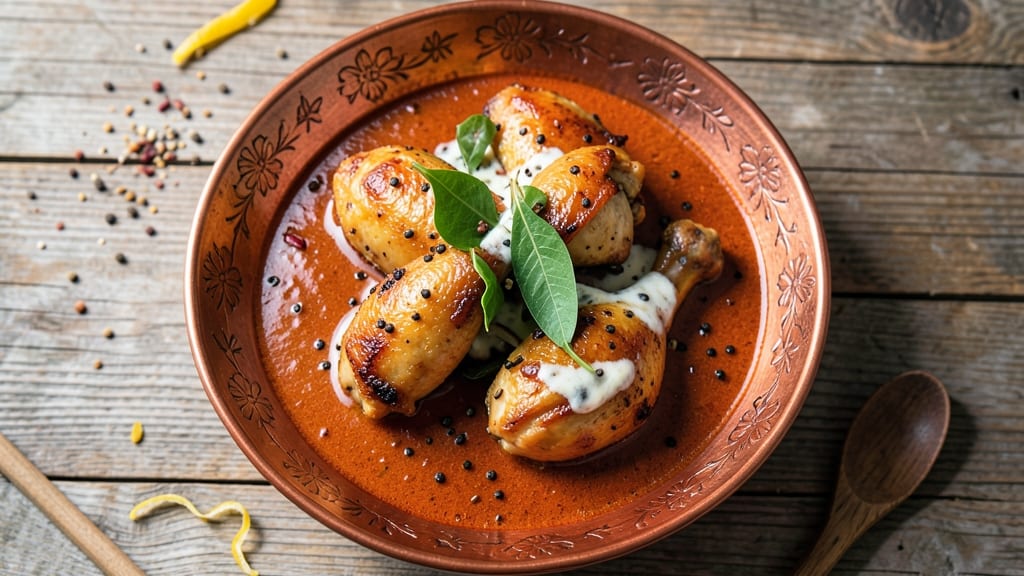
This authentic Chettinad chicken curry brings the bold flavors of Tamil Nadu straight to your kitchen—where fiery tamarind, fragrant curry leaves, and carefully layered spices transform simple chicken into a restaurant-worthy masterpiece.
The secret lies in the slow simmering process that develops deep, complex flavors without overpowering the natural taste of the meat. I first discovered this recipe through my grandmother's handwritten notes, where she'd scrawled instructions in Tamil and English, her way of preserving tradition while adapting to our home kitchen.
The magic begins with a marinade of yogurt, mustard, and the signature Chettinad spice blend—black pepper, fennel, and dried red chilies—that tenderizes the chicken while infusing it with aromatic depth.
What sets this curry apart is the two-stage cooking method: first, a tempering of mustard seeds and curry leaves that releases their oils and flavors into the pot, then a long simmer with coconut milk that creates a velvety sauce with just the right balance of heat and richness.
This isn't a quick weeknight dish, but the results are worth every minute of attention.
By the time you serve it—steaming over steamed rice with crispy appalam on the side—you'll taste the layers of tradition in every bite: the tangy brightness of tamarind, the earthy warmth of curry leaves, and the gentle heat that lingers without overwhelming.
The sauce clings to the chicken, coating it in a glossy, aromatic glaze that makes each piece tender yet substantial. This is the kind of curry that turns casual dinners into memorable meals, where the kitchen becomes a bridge between generations.
For those new to Chettinad cooking, don't be intimidated by the spice list—each ingredient plays a specific role, and I'll guide you through every step to ensure authenticity without guesswork.
The key is patience; let the flavors develop slowly, and you'll end up with a dish that's both boldly authentic and deeply comforting. Let's get started on creating this taste of home.
Ingredients for authentic chettinad chicken curry
Bold spices, tender chicken, and layers of tradition—here's what transforms a simple meal into Chettinad magic.
| Ingredient | Amount | Notes |
|---|---|---|
| Chicken Thighs, Bone-In 🍗 | 1 ½ lb | Cut into 2-inch pieces, skin-on preferred |
| Plain Whole Milk Yogurt 🥛 | ½ cup | Full-fat for best marinade texture |
| Mustard Seeds, Black 🌿 | 2 tbsp | Toasted for aromatic depth |
| Curry Leaves, Fresh 🌿 | ¼ cup | Packed, stems removed |
| Tamarind Paste 🍈 | ¼ cup | Adjust for desired tanginess |
| Coconut Milk, Full-Fat 🥥 | 1 can (13.5 oz) | Canned, no additives |
| Black Peppercorns 🌶️ | 1 tbsp | Freshly cracked for heat |
| Fennel Seeds 🌿 | 1 tbsp | Toasted for sweetness |
| Dried Red Chilies 🔥 | 4 whole | Medium heat level |
| Garlic Cloves 🧄 | 8 cloves | Peeled, roughly chopped |
| Onion, Yellow 🧅 | 1 whole | Medium size, finely chopped |
| Ginger Root 🌿 | 1 inch | Fresh, peeled, grated |
| Tomatoes, Roma 🍅 | 2 whole | Medium size, quartered |
| Salt 🧂 | 1 ½ tsp | Diamond Crystal preferred |
| Ghee or Coconut Oil 🫒 | ½ cup | For tempering and cooking |
The chicken is non-negotiable—bone-in thighs stay juicier than breasts. Look for free-range or organic at Whole Foods or Indian grocery stores for richer flavor. Fresh curry leaves are the soul of this dish; avoid dried substitutes unless absolutely necessary. Tamarind paste varies wildly in quality—pick the block form and grate your own for authentic tang. The black mustard seeds and fennel seeds should be toasted until fragrant; no burnt edges, just warm aroma. For dried red chilies, Kashmiri or Byadgi varieties add color without extreme heat.
No fresh curry leaves? Substitute with 2 tbsp dried curry leaf powder, but expect less aroma. Tamarind too sour? Balance with a pinch of sugar. Running low on ghee? Coconut oil works identically—just don't burn it. The yogurt marinade can be made a day ahead, but add the chicken last minute to prevent over-tenderizing. For extra richness, swap half the coconut milk for cashew cream. The tomatoes can be replaced with 1 tbsp tomato paste if you're short on time.
Store the marinade in an airtight container for up to 2 days in the fridge. The cooked curry reheats beautifully—add a splash of water or coconut milk to prevent drying. Keeps for 3 days refrigerated or 3 months frozen. I always make double batches because it freezes exceptionally well. For serving, warm the appalam (rice cakes) separately—they add the perfect crunch contrast to the creamy curry.
Why You'll Love This Recipe
- Here’s what sold me: that bright, tangy punch from the tamarind paste cuts through the richness of the yogurt and chicken fat. It’s not sweet, not sour—it’s complex, the kind of flavor that makes you pause mid-bite and think, “Wait, how did they do that?”
- I’ll be real: this tastes better the next day. The flavors meld, the chicken gets even more tender, and honestly? I’ve reheated portions for lunch three days in a row without a single complaint. Plus, bone-in thighs stretch further than boneless, so you’re getting more bang for your buck.
Step-by-step instructions for authentic Chettinad chicken curry
Here's the traditional method that delivers bold, layered flavors with perfect balance.
Marinate the Chicken for Maximum Flavor
In a large bowl, combine the 1.5 lb chicken thighs with the 0.5 cup plain whole milk yogurt. The yogurt helps tenderize the meat while adding a subtle tang. Add the 1.5 tsp salt, 1 tbsp freshly cracked black peppercorns, and 1 tbsp toasted fennel seeds. Mix thoroughly with your hands until every piece is evenly coated.
Next, add the 2 tbsp toasted mustard seeds, 4 whole dried red chilies, 8 cloves roughly chopped garlic, 1 whole finely chopped onion, 1 inch grated ginger root, and 2 whole quartered Roma tomatoes. The mustard seeds and chilies will infuse the marinade with their signature heat and aroma. Let the mixture marinate in the refrigerator for at least 4 hours, or ideally overnight. This extended marinating time ensures the flavors penetrate deeply and the chicken remains tender.
Prepare the Tamarind-Coconut Base
In a separate bowl, mix the 0.25 cup tamarind paste with 1 cup water to create a smooth paste. The tamarind will provide the signature tangy backbone of this curry. In a large, heavy-bottomed pot, heat 0.25 cup ghee or coconut oil over medium heat. Once the oil shimmers but doesn't smoke, add the 0.25 cup packed curry leaves and let them sizzle for 30 seconds until fragrant.
Add the tamarind mixture and stir continuously for 2-3 minutes until it thickens slightly. This step develops the tangy foundation of the curry. Then, pour in the 1 can (13.5 oz) full-fat coconut milk and stir well. Let this mixture simmer gently for 5 minutes, allowing the flavors to meld together. This coconut-tamarind blend is what gives Chettinad curry its distinctive depth.
Cook the Chicken Until Tender
Remove the chicken from the marinade, shaking off any excess (don't drain the marinade). Add the chicken to the pot with the tamarind-coconut mixture. Increase the heat to medium-high and bring the curry to a gentle boil. Once boiling, reduce the heat to low and cover the pot. Let the chicken simmer for 30-35 minutes, turning occasionally, until it's fork-tender and the juices run clear.
Here's the thing—don't rush this step. The slow cooking ensures the chicken remains moist and absorbs all the complex flavors. You'll know it's done when the chicken easily pulls apart with minimal resistance. If the curry starts to reduce too much, add 2-3 tablespoons of water to maintain the right consistency.
Temper and Finish the Curry
Once the chicken is tender, increase the heat to medium-high and let the curry reduce slightly, allowing the flavors to concentrate. This is where we build the signature Chettinad aroma. Add the remaining 0.25 cup ghee or coconut oil to the pot and let it heat for 1 minute until it begins to foam.
Now, here's the moment that matters: quickly add the remaining 2 tbsp toasted mustard seeds, 4 whole dried red chilies, and 8 cloves garlic cloves. The oil will sizzle and pop as the spices toast—this is what creates that irresistible aroma. Stir for 30 seconds until the spices are fragrant but not burnt. Then, immediately reduce the heat to low and let the curry simmer for another 5 minutes to allow all the flavors to meld together.
Adjust and Serve with Confidence
Taste the curry and adjust the seasoning if needed. You might need a touch more salt or a splash of water to reach your desired consistency. The curry should coat the back of a spoon but still be saucy enough to spoon over rice. Let it sit for 5 minutes off the heat to allow the flavors to fully develop.
Serve the Chettinad chicken curry hot with steamed basmati rice. The contrast of the fragrant rice with the bold, spicy curry is what makes this dish truly special. Each bite should deliver layers of heat from the chilies, sweetness from the fennel, and tang from the tamarind—all balanced by the richness of the coconut milk. This is authentic Chettinad cooking at its finest.
Pro Tips For Making Authentic Chettinad Chicken Curry
- Bloom the Spices Slow: Chettinad curry isn’t just about throwing spices in—it’s about coaxing their flavors out. After adding mustard seeds and curry leaves, lower the heat to medium and let them pop for 30 seconds before adding onions. I used to rush this, and the mustard would burn before the curry leaves could perfume the oil. That’s when your curry starts tasting flat.
- Whisk Tamarind Paste: Tamarind paste is sticky, clumpy, and stubborn. Before adding it to the yogurt, mix it with 2 tablespoons of warm water and whisk like you’re angry at it. This prevents grainy lumps in your curry—nothing ruins the balance of flavors faster than a mouthful of undissolved paste. (Yes, even if you’re impatient like me.)
- Marinate Chicken Overnight: Bone-in chicken thighs need time to tenderize, and Chettinad spices are no joke. Mix yogurt, tamarind, red chili powder, and a pinch of turmeric, then let the chicken soak for at least 8 hours. I skipped this once and ended up with chewy, flavorless meat—your future self will thank you for the patience.
- Simmer, Don’t Boil: The curry’s magic happens in the slow simmer, not the rolling boil. Once the chicken is cooked (internal temp 75°C/167°F), reduce to the lowest heat you can tolerate and let it bubble gently for 20 minutes. This lets the flavors meld and the tamarind’s tang mellow out. After burning three batches, I finally figured out that patience here makes all the difference.
Creative variations of this dish
Vegetarian Chettinad
Swap the chicken for 1.5 lb firm tofu or chickpeas (2 cans, drained) to create a vegetarian version. Press the tofu to remove excess water, then cube it and marinate in the same yogurt-spice blend for 4 hours.
Cook it with the tamarind-coconut base until tender—about 20 minutes for tofu, 15 minutes for chickpeas. The texture will be hearty, with chickpeas adding a satisfying bite. 🌱
Seafood Twist
Replace chicken with 1.5 lb firm white fish like cod or mahi-mahi, cut into chunks. Marinate for only 1 hour (fish cooks faster) and simmer for 10-12 minutes until flaky.
The delicate fish absorbs the tamarind-coconut flavors beautifully, creating a lighter yet equally bold dish. Serve with crusty bread to soak up the sauce. 🐟
Slow-Cooker Adaptation
For hands-off cooking, combine all marinade ingredients in your slow cooker on low heat for 4-5 hours. Add the chicken and cook for another 1.5-2 hours until tender.
The slow cooker intensifies the flavors without risking burning the spices. This method is perfect for weeknight dinners when you want minimal effort but maximum flavor. 🍲
Spice-Level Control
Adjust heat by modifying the chilies: use 2 whole dried chilies for mild, 4 whole for medium, or 6 whole + 1 tsp cayenne for fiery. For extra depth, add ½ tsp asafoetida (hing) when tempering—the aroma is unmistakable but subtle.
Always taste as you go to balance the heat with coconut milk's creaminess. 🌶️
Regional Variations
In Madurai-style, add 1 tbsp coriander seeds to the marinade and use ½ cup coconut milk for a lighter sauce. For Kanyakumari influence, include 1 tsp grated nutmeg in the tempering step. Each variation keeps the tamarind-coconut core but offers a unique spice profile. 🗺️
Make-Ahead Magic
The flavors improve overnight! Cook the curry fully, then refrigerate for 24 hours to let the spices meld. Reheat gently with 2 tbsp water to restore creaminess.
Freeze portions in airtight containers for up to 3 months—thaw in the fridge and reheat slowly. This is my go-to for busy nights. ❄️
Nutrition facts
Frequently asked questions
What makes Chettinad chicken curry different from other South Indian curries?
The defining features are the tamarind-coconut base and the layered spice tempering. Unlike many curries that use tomatoes as the primary acid, Chettinad relies on tamarind for tang and coconut milk for richness. The mustard seeds and curry leaves are toasted twice—once in the marinade and again at the end—to create that signature aromatic depth. Plus, the slow simmering process develops complex flavors that set it apart from quicker-cooking curries.
Can I make this curry without fresh curry leaves?
Yes, but expect less aroma. Use 2 tablespoons dried curry leaf powder instead, but add it to the tempering stage (not the marinade) to preserve some of the flavor. For a closer substitute, try 1 teaspoon dried fenugreek leaves—they won't be identical, but they'll add a similar earthy note. Fresh curry leaves are ideal, though, as they release their oils beautifully when toasted.
How do I adjust the spice level for picky eaters?
Start by reducing the dried red chilies to 2 whole for mild heat, or remove them entirely and add ½ teaspoon cayenne instead. For extra safety, remove the seeds from the chilies before using. The coconut milk naturally balances heat, so you can always add more if needed. Always taste as you go—you can't overdo the coconut milk, but you can't take out the heat once it's added.
What's the best way to store leftovers?
Let the curry cool completely, then transfer to an airtight container with a layer of plastic wrap pressed directly on the sauce to prevent skin formation. Refrigerate for up to 3 days—reheat gently with 2 tablespoons water or coconut milk to restore creaminess. For freezing, portion into containers and store for up to 3 months. Thaw overnight in the fridge before reheating. The flavors actually improve after resting!
Can I use chicken breasts instead of thighs?
Not ideal—they're leaner and more likely to dry out during the long simmer. If you must use breasts, marinate them for no more than 2 hours (not overnight) and cook them uncovered for the first 10 minutes to seal in juices. For best results, stick with thighs—they stay moist and absorb flavors better. If you're set on breasts, add 1 tablespoon ghee to the sauce at the end to compensate for dryness.