
Main Courses
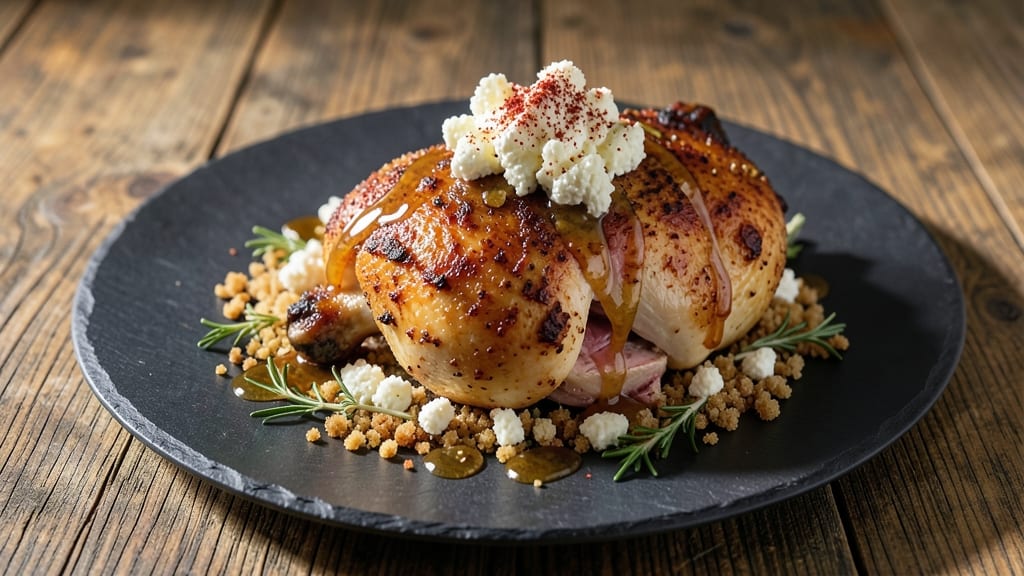
This baked chicken and goat cheese recipe delivers restaurant-quality results with minimal effort—juicy chicken thighs topped with a golden crust and creamy goat cheese that melts into every bite. 💛 I developed this one-pan technique after years of perfecting my approach to balancing crispy exteriors with tender, flavorful interiors, and the goat cheese adds a luxurious touch that elevates even weeknight dinners.
The secret lies in the 30-minute baking time at 400°F, where the chicken's natural juices render while the goat cheese transforms into a bubbly, golden blanket.
I use a simple seasoning blend of garlic powder, paprika, and thyme, but the real magic happens when the cheese caramelizes slightly at the edges—creating a contrast that makes each bite unforgettable. This method works equally well with chicken breasts or thighs, making it versatile for any meal.
By the time you pull this dish from the oven, you'll have perfectly tender chicken with a crispy, caramelized crust and pockets of melted goat cheese that add richness without overwhelming the dish.
The aroma alone will have everyone gathering at the table, and the presentation is elegant enough for company but simple enough for a weeknight. Serve with a crisp green salad or roasted vegetables to round out the meal.
What makes this recipe truly special is how it transforms basic ingredients into something extraordinary with just a few key techniques. The goat cheese not only adds flavor but also creates a beautiful, golden finish that makes the dish look as impressive as it tastes.
Trust me—this is the kind of recipe that becomes a regular in your rotation once you try it.
Ingredients for baked chicken and goat cheese
Golden crust, melty cheese, and juicy chicken—all from one pan with these 12 ingredients.
| Ingredient | Amount | Notes |
|---|---|---|
| Chicken Thighs (Bone-In, Skin-On) 🍗 | 1 ½ lb | Evenly sized for consistent cooking |
| Goat Cheese (Log or Crumbled) 🧀 | 8 oz | Soft, creamy variety preferred |
| All-Purpose Flour 🌾 | ½ cup | For dredging chicken |
| Garlic Powder 🧄 | 1 tsp | Freshly ground preferred |
| Smoked Paprika 🌶️ | 1 tsp | For smoky depth |
| Dried Thyme 🌿 | ½ tsp | Or 1 tsp fresh thyme leaves |
| Salt 🧂 | 1 tsp | Diamond Crystal kosher salt |
| Black Pepper 🌶️ | ½ tsp | Freshly cracked |
| Olive Oil 🫒 | 2 tbsp | Extra-virgin for richness |
| Fresh Rosemary 🌿 | 2 sprigs | For aroma and garnish |
| Fresh Basil Leaves 🌿 | ¼ cup | Chopped for garnish |
| Honey 🍯 | 1 tsp | For subtle sweetness |
The chicken thighs are non-negotiable here—bone-in and skin-on deliver the best texture and flavor. Trader Joe's or Whole Foods carry excellent pre-trimmed cuts, but if you're buying whole thighs, ask the butcher to remove the skin for you. Goat cheese is where the magic happens: log-style (like La Tourangelle) melts more smoothly than crumbled varieties. For the herbs, fresh thyme and rosemary make all the difference, but if you're using dried, cut the amount in half. The honey adds a subtle sweetness that balances the richness of the goat cheese—don’t skip it, even if it’s just a touch.
No goat cheese? Cream cheese mixed with a splash of heavy cream works in a pinch, though it won’t have the same tang. Running low on fresh herbs? Dried thyme and rosemary at half the amount will keep the dish on track. The smoked paprika can be swapped for regular paprika if that’s all you have, but the smoky depth is worth hunting down. For the flour, all-purpose is fine, but if you’ve got bread flour, it’ll give the crust a slightly crispier texture. And if you’re feeling adventurous, a sprinkle of crushed pistachios on top before baking adds a delightful crunch.
This dish reheats beautifully—just pop it in the oven at 350°F for 10 minutes to revive that golden crust. Store leftovers in the fridge for up to 4 days, covered tightly to keep the cheese from drying out. For freezing, portion the chicken into individual servings and freeze for up to 3 months. When you’re ready to eat, thaw in the fridge overnight and reheat as directed. The aroma alone will have everyone rushing to the table, so plan accordingly—this one’s a crowd-pleaser.
Why You'll Love This Recipe
- One-Pan Magic: Honestly, I dump everything on a sheet pan—no fancy prep, no extra dishes. The flour dredge on those skin-on thighs? Crispy perfection with zero effort.
- Tangy Crispy Crave: That smoked paprika and garlic powder combo? It’s like a warm hug for your taste buds, but the goat cheese melts into gooey pockets that make it ridiculously good.
- Leftovers That Win: Between us, this dish tastes even better the next day—especially reheated with a sprinkle of fresh herbs. My lunchbox’s new best friend.
- Budget-Friendly Feast: Bone-in thighs stretch further than breasts, and goat cheese adds luxury without breaking the bank. Feeds four for less than takeout, and still feels fancy.
Step-by-step instructions for baked chicken and goat cheese
Here's how to create that perfect golden crust with melty goat cheese centers—no fancy skills required.
👨🍳 Step 1: Season and Dredge the Chicken Thighs
Pat the 1.5 lb chicken thighs (bone-in, skin-on) completely dry with paper towels—this is non-negotiable for crispy skin. In a shallow bowl, whisk together the 0.5 cup all-purpose flour, 1 tsp garlic powder, 1 tsp smoked paprika, 0.5 tsp dried thyme, 1 tsp salt, and 0.5 tsp black pepper. Toss the chicken in the flour mixture until evenly coated, shaking off any excess.
I like to press the seasoning into the skin gently—this ensures it sticks and infuses during baking. Let the seasoned chicken sit at room temperature for 10 minutes while you preheat the oven. This short rest prevents cold spots that can lead to uneven cooking.
🔥 Step 2: Sear the Chicken for Extra Flavor
Preheat your oven to 400°F. Heat a large oven-safe skillet over medium-high heat and add the 2 tbsp olive oil. Once the oil shimmers, add the chicken thighs skin-side down. Sear for 4-5 minutes until the skin turns golden brown and crispy, and the chicken releases easily from the pan.
Flip the thighs and sear the other side for another 3-4 minutes. You want deep color here—this builds flavor and creates that perfect crust. Transfer the skillet to the preheated oven, leaving the lid off. Bake for 15 minutes to render some fat and start cooking the chicken through.
🥘 Step 3: Add Goat Cheese and Honey Glaze
Remove the skillet from the oven and reduce heat to 375°F. Cut the 8 oz goat cheese (log or crumbled) into 8 equal pieces—about 1 oz each. Place one piece of goat cheese on top of each chicken thigh, pressing down gently so it stays in place. Return the skillet to the oven.
Bake for another 10-12 minutes until the chicken reaches an internal temperature of 165°F when measured in the thickest part. In the last 2 minutes, drizzle the 1 tsp honey evenly over the chicken and goat cheese. The honey caramelizes beautifully, adding a subtle sweetness that balances the savory flavors.
⏰ Step 4: Garnish and Rest for Juiciness
Remove the chicken from the oven and let it rest for 5 minutes before serving. This resting period is crucial—it allows the juices to redistribute, ensuring each bite stays moist. While resting, finely chop the 0.25 cup fresh basil leaves and the 2 sprigs fresh rosemary, removing any tough stems.
Sprinkle the chopped herbs over the chicken just before serving. The basil adds freshness, while the rosemary ties together all the savory notes. Serve immediately with a simple side of roasted vegetables or crusty bread to soak up the delicious juices.
Pro Tips For Making Baked Chicken And Goat Cheese
- Pat the thighs dry: Goat cheese and crispy skin don’t mix well when the chicken’s wet—trust me, I’ve learned this after soggy batches. Use paper towels to wipe them down before dredging, and don’t skip the 10-minute air-dry on a rack if you’re in a hurry.
- Crust the flour first: I used to just toss the thighs in flour, but that leaves uneven coverage. Instead, shake the pan with flour first, then roll the thighs in it—this guarantees that golden, paprika-kissed crust on every inch. (Yes, even the bone side.)
- Don’t overcrowd the pan: I’ve seen people shove all six thighs in a single skillet, thinking it’ll cook faster. Wrong. Leave gaps between them—otherwise, the goat cheese will steam instead of melt into a rich, caramelized topping. A single layer is non-negotiable.
- Use room-temp goat cheese: Cold goat cheese straight from the fridge turns the dish into a science experiment—it won’t melt properly and just sits there like a sad, crumbly lump. Take the log out 20 minutes before baking, or even better, let it sit in warm water for 5 minutes. (Your future self will thank you.)
Troubleshooting perfect results
Chicken Overcooking
If your chicken ends up dry or rubbery, you likely overcooked it. Bone-in thighs are forgiving, but they still need careful timing. Use a meat thermometer to check for 165°F internal temperature—never guess!
I’ve found that 25-30 minutes total at 400°F works best for thighs. If you’re using breasts, reduce time to 18-20 minutes to avoid drying out. 🌡️
Goat Cheese Not Melting
Cold goat cheese won’t melt properly, so let it sit at room temperature for 15-20 minutes before using. If it still looks grainy after baking, your oven temperature might be too low.
Increase to 375°F for the final 10 minutes to ensure a creamy texture. For extra insurance, I sometimes cover the skillet loosely with foil during the last 5 minutes to trap heat.
Skin Not Crispy
Damp chicken skin is the #1 reason for soggy results. Pat the thighs thoroughly dry before seasoning—no shortcuts! For extra crispiness, I press the skin down gently with a spoon after dredging.
If your oven runs hot, reduce temp to 375°F for the final 10 minutes to prevent over-browning while keeping the skin crisp.
Uneven Cooking
Large or unevenly sized thighs can lead to inconsistent doneness. Trim any excess fat and aim for 6-8 oz pieces each. If your oven has hot spots, rotate the skillet halfway through baking.
I also recommend using an oven thermometer to verify your oven’s actual temperature—many run 25°F hotter or colder than set.
Cheese Spreading Too Much
If the goat cheese spreads everywhere, it’s likely too soft or your oven is too hot. Use room-temperature cheese and press it firmly onto the chicken. For extra stability, I sometimes make small wells in the cheese with a spoon before baking.
If it still spreads, reduce oven temp to 350°F for the final 8 minutes to slow melting.
Nutrition facts
Frequently asked questions
Can I use chicken breasts instead of thighs in this recipe?
Yes, but with adjustments! Chicken breasts cook faster and dry out more easily. For 4 boneless breasts (6-8 oz each), reduce baking time to 18-20 minutes total (after adding goat cheese) and use 375°F instead of 400°F to prevent overcooking. Pound them to ½-inch thickness for even cooking. Brine them for 30 minutes in ¼ cup salt + 4 cups water to keep them juicy.
What if I don’t have goat cheese? What’s the best substitute?
For a similar texture, mix 8 oz cream cheese with 2 tbsp heavy cream until smooth. For tangier flavor, blend 6 oz cream cheese + 2 oz feta cheese. Avoid pre-shredded cheese—it contains anti-caking agents that prevent melting. If you’re dairy-free, try 8 oz vegan cream cheese or mashed avocado for a neutral base.
How do I make this dish ahead of time?
Prepare the chicken up to 2 days ahead: Season and dredge the thighs, then refrigerate uncovered on a wire rack for 24 hours to dry the skin. When ready to cook, sear and bake as directed, but add the goat cheese 10 minutes before serving to prevent over-melting. Store leftovers in the fridge for 4 days or freeze for 3 months. Reheat at 350°F for 10 minutes.
Why does the goat cheese turn brown or burn?
This happens when the oven is too hot or the cheese touches the skillet. Reduce heat to 350°F for the final 8 minutes and place the skillet on a metal cooling rack (not directly on the oven rack) to allow airflow. For extra protection, cover loosely with foil during the last 5 minutes. Always use room-temperature cheese to prevent uneven melting.
What sides pair best with this dish?
For a balanced meal, try:
- Crisp roasted Brussels sprouts with balsamic glaze
- Creamy polenta or mashed potatoes
- Simple arugula salad with lemon vinaigrette
- Grilled asparagus with parmesan shavings The goat cheese’s tang cuts through rich sides beautifully, while acidic or earthy flavors (like Brussels sprouts) complement the dish’s richness.