
Sauces & Condiments
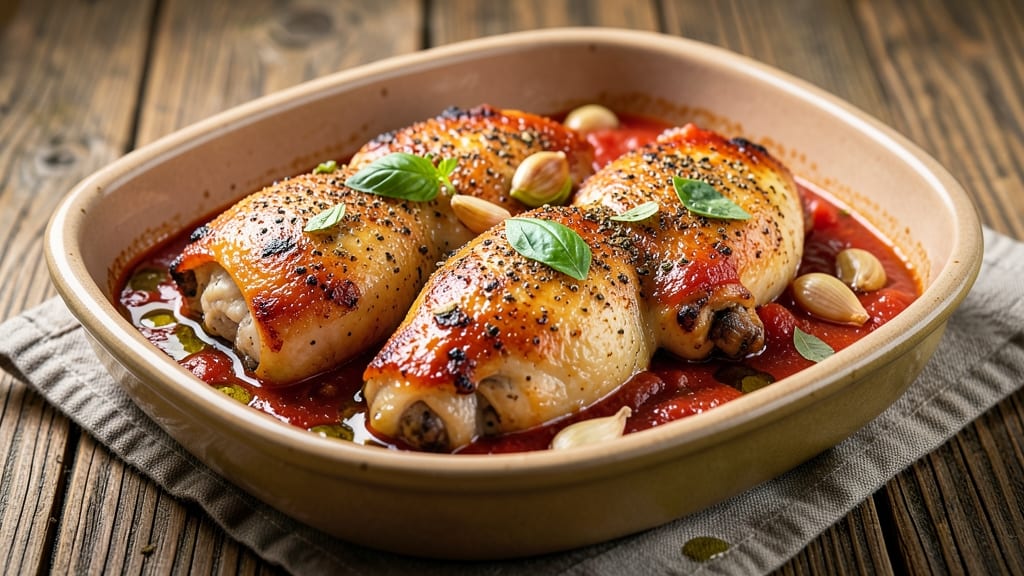
This baked chicken in tomato sauce recipe transforms a simple one-pan meal into a restaurant-worthy Italian classic. The secret lies in balancing tender chicken with a rich, aromatic tomato sauce that simmers into perfect harmony.
With minimal prep and just 30 minutes of hands-off baking, you’ll achieve golden, juicy chicken swimming in a velvety sauce that’s impossible to resist.
The beauty of this dish is its simplicity—no fancy techniques required. You’ll start with a basic tomato sauce base, enhanced with garlic, herbs, and a touch of sweetness, then let it work its magic while the chicken bakes.
The sauce thickens beautifully, clinging to the chicken for every bite, while the 375°F oven ensures the chicken stays moist and flavorful.
What you’ll end up with is a foolproof weeknight dinner that feels indulgent without the fuss. The chicken emerges tender and succulent, perfectly coated in the sauce, while the aromas of garlic, basil, and tomatoes fill your kitchen.
Serve it over pasta, with crusty bread, or alongside roasted vegetables for a complete meal.
This recipe is designed to be your go-to for easy, satisfying dinners—no stress, no shortcuts that compromise quality. The sauce is rich enough to stand alone but balanced enough to complement the chicken perfectly.
Ready to create a meal that tastes like it took hours to make in just 30 minutes? Let’s get started.
Ingredients for baked chicken and tomato sauce
A simple pantry raid yields everything needed for this restaurant-quality Italian chicken dish.
| Ingredient | Amount | Notes |
|---|---|---|
| Boneless, Skinless Chicken Thighs 🍗 | 1 ½ lb | Cut into even-sized pieces |
| San Marzano Tomatoes 🍅 | 28 oz | Canned, crushed or diced |
| Garlic Cloves 🧄 | 4 cloves | Minced for aromatic base |
| Fresh Basil Leaves 🌿 | ½ cup | Chopped, stems removed |
| Dried Oregano 🍃 | 1 tsp | Italian preferred |
| Extra-Virgin Olive Oil 🫒 | ¼ cup | For richness and balance |
| Chicken Broth 💧 | ½ cup | Low-sodium preferred |
| Red Wine Vinegar 🍷 | 1 tbsp | For brightness |
| Granulated Sugar 🍚 | 1 tsp | Balances acidity |
| Salt 🧂 | 1 ½ tsp | Diamond Crystal preferred |
| Black Pepper 🌶️ | ½ tsp | Freshly ground |
| Fresh Parsley 🌿 | ¼ cup | Chopped for garnish |
| All-Purpose Flour 🌾 | 1 tbsp | For sauce thickening |
The chicken thighs are the star—bone-in, skin-on if you can find them, but boneless works too. Look for thighs around 8-10 oz each at Whole Foods or your local butcher for the best texture. The San Marzano tomatoes make all the difference here—Trader Joe's carries them in cans, and they're worth the splurge. Fresh basil is ideal, but if you're using dried, reduce to one-third the amount and add it at the end. The olive oil should be extra-virgin for that fruity depth that carries through the sauce.
No San Marzano tomatoes? Crushed regular tomatoes work fine—just drain them well to avoid a watery sauce. Short on basil? Fresh parsley or dried basil (again, one-third amount) will do. The red wine vinegar can be swapped for lemon juice if you're avoiding alcohol, though it won't have the same depth. The sugar balances the acidity—skip it if you prefer tart, but I find it essential for harmony. For the chicken broth, low-sodium is key unless you're adding extra salt later. The flour is just for thickening at the end—cornstarch works too if you're gluten-free.
Prep the chicken first—pat it dry and season it well before baking. The sauce can be made ahead and reheated—it actually tastes better the next day as flavors meld. Store leftovers in the fridge for up to 4 days or freeze for 3 months. I like to portion the sauce separately so I can drizzle it over pasta or use it as a dip. The herbs, especially basil, lose potency fast, so store them in the fridge wrapped in damp paper towels if you're not using them all at once.
Why You'll Love This Recipe
- One-Pan Magic: I swear by this recipe when I’m too tired to scrub pots—just toss the chicken thighs, crushed tomatoes, and garlic on a sheet pan, drizzle with olive oil, and bake. The sauce thickens right there, no stirring required.
- San Marzano Secret: That sweet, rich tomato flavor? It’s all in the San Marzano—none of that watery canned nonsense. The basil and oregano turn it into something that tastes like a sun-drenched Italian kitchen, even if I’m cooking in my tiny apartment.
- Leftover Hero: This dish actually improves the next day. The chicken gets even more tender, and the sauce reduces to a glossy, herby glaze. I make double batches just to reheat for lunch—zero guilt, all flavor.
- Budget-Friendly Feast: Chicken thighs are cheaper than breasts, and a single can of San Marzano tomatoes stretches for two meals. Add a bag of pasta or crusty bread, and suddenly you’ve fed the whole family for under $15. (Yes, even on a Tuesday night.)
Step-by-step instructions for baked chicken in tomato sauce
Here's how to create a rich, flavorful tomato sauce that clings perfectly to tender chicken thighs.
Sear the Chicken for Maximum Flavor
Preheat your oven to 375°F. Heat 0.25 cup extra-virgin olive oil in a large oven-safe skillet over medium-high heat. Pat the 1.5 lb boneless, skinless chicken thighs dry with paper towels and season both sides generously with 1.5 tsp salt and 0.5 tsp black pepper.
Working in batches if needed, add the chicken thighs to the skillet and cook for 3-4 minutes per side until golden brown and cooked through to 165°F internally. This initial sear creates a flavorful crust and prevents the chicken from drying out during baking. Transfer the seared chicken to a plate and set aside.
Build the Tomato Sauce Base
In the same skillet (no need to wipe it clean), reduce the heat to medium and add the 4 cloves minced garlic cloves. Sauté for 30 seconds until fragrant—don't let it burn, or you'll get bitter flavors. Stir in the 1 tsp dried oregano and cook for another 10 seconds to toast the spices.
Pour in the 28 oz San Marzano tomatoes, scraping up any browned bits from the bottom of the pan. Add the 0.5 cup chicken broth, 1 tbsp red wine vinegar, 1 tsp granulated sugar, and 1 tbsp all-purpose flour. Stir well to combine and bring to a gentle simmer. Let the sauce cook uncovered for 10 minutes while you prepare the fresh herbs.
Finish the Sauce and Combine
While the sauce simmers, chop the 0.5 cup fresh basil leaves and 0.25 cup fresh parsley into small pieces, removing any thick stems. Return the seared chicken thighs to the skillet, spooning sauce over them to coat evenly. Sprinkle the fresh herbs over the top and let everything simmer together for 5-7 minutes.
You'll know the sauce is ready when it's thickened enough to coat the back of a spoon and the chicken is heated through. The herbs should be wilted but still vibrant in color. Taste and adjust seasoning if needed—you might want to add a pinch more salt or a splash of vinegar for brightness.
Bake to Perfection
Transfer the skillet to the preheated 375°F oven and bake uncovered for 15-20 minutes. This final baking step allows the flavors to meld together and the sauce to develop its full richness. The chicken should be cooked through to 175°F internally, and the sauce should be thick and glossy.
Here's the thing—don't skip the baking step. It might seem like everything's done after the stovetop cooking, but those final minutes in the oven transform the dish from good to exceptional. The sauce will reduce slightly, intensifying its flavor, and the chicken will absorb all those beautiful tomato notes.
Rest and Serve
Remove the skillet from the oven and let the chicken rest in the sauce for 5 minutes before serving. This resting period allows the juices to redistribute throughout the chicken, ensuring each bite is moist and flavorful. The sauce will thicken slightly as it cools, so if you prefer it looser, you can stir in 1-2 tablespoons of water or broth.
Serve the chicken and sauce directly from the skillet, spooning the rich tomato mixture over each portion. The sauce should cling beautifully to the chicken, creating that classic Italian restaurant effect. Garnish with additional fresh basil if you like, and serve with crusty bread or over your favorite pasta to soak up every last bit of that delicious sauce.
Pro Tips For Making Baked Chicken And Tomato Sauce
- Sear the Chicken First: Before baking, hit the thighs with a hot pan—just 2-3 minutes per side until golden. The crust locks in juices and deepens the tomato sauce flavor, so don’t skip this step even if you’re in a hurry. I used to toss them straight into the sauce and ended up with bland, rubbery chicken.
- Crush Those Garlic Cloves: Smash the garlic cloves with the flat side of your knife before adding them to the sauce. This releases more flavor without burning, and the sauce will taste richer. I learned this after tasting the difference—it’s night and day.
- Simmer the Tomatoes: Reduce the San Marzano tomatoes by half before adding them to the chicken. This concentrates the sweetness and thickens the sauce naturally, so you won’t end up with a watery mess. Sounds simple, but it’s the thing that matters most.
- Add Basil Late: Stir in the fresh basil only in the last 5 minutes of cooking—otherwise, it turns bitter and mushy. The heat will wilt it just enough to release its aroma without overpowering the dish. I was skeptical until I tried it, and now I never add it early.
Troubleshooting this dish
Sauce Too Thin?
If your tomato sauce turns out watery, it’s usually from excess liquid in the tomatoes or broth. Next time, drain the San Marzano tomatoes thoroughly before adding them to the skillet—10 minutes in a colander works wonders.
For immediate fixes, simmer uncovered for an extra 5-10 minutes to evaporate moisture. If you need a quick thickener, stir in 1 tbsp cornstarch mixed with 2 tbsp water and simmer for 2 minutes. 💡
Chicken Drying Out
Overcooking is the #1 culprit. Use a meat thermometer to check for 165°F internal temperature—no guessing! If your chicken starts drying out during baking, tent it loosely with aluminum foil for the last 10 minutes of cooking.
For extra moisture, add 2-3 tbsp chicken broth to the pan before baking. I’ve found that bone-in thighs stay juicier than boneless, so consider switching if you’re struggling. 🍗
Sauce Too Acidic
If the red wine vinegar or tomatoes make the sauce taste harsh, balance it with ½ tsp sugar or a pinch of salt. For a richer flavor, stir in 1 tbsp tomato paste at the end.
If you prefer less acidity next time, reduce the vinegar to ½ tbsp and add 1 extra clove of garlic for depth instead. Taste as you go—adjust gradually to avoid overcorrecting. 🍷
Herbs Lose Flavor
Fresh herbs like basil and parsley can turn bitter or lose potency if cooked too long. Add them only in the last 5 minutes of stovetop cooking or right before baking. For extra brightness, sprinkle fresh herbs just before serving.
If using dried herbs, toast them briefly in the skillet with the garlic for 10 seconds to release their aroma without bitterness. 🌿
Skillet Too Hot
High heat can burn the sauce or dry out the chicken. Keep the stovetop on medium-low when simmering the sauce, and medium when searing. If you notice the sauce is reducing too quickly, add 1-2 tbsp water or broth to maintain a gentle simmer.
For baking, 375°F is ideal—any hotter risks overcooking the chicken while the sauce stays underdone. 🌡️
Sauce Sticking to Pan
A well-seasoned skillet prevents sticking, but if your sauce clings stubbornly, it’s likely from uncooked flour or residual moisture. Make sure the 1 tbsp flour is fully dissolved in the sauce before adding tomatoes.
For stubborn sticking, add 1 tbsp olive oil to the pan before baking. After cooking, let the skillet cool slightly before cleaning—hot sauce sets like glue and is nearly impossible to remove. 🔥
Nutrition facts
Frequently asked questions about baked chicken in tomato sauce
Can I use chicken breasts instead of thighs?
Chicken breasts work but require extra care to stay moist. Use bone-in breasts for better texture and cut them into even pieces. Bake at 350°F instead of 375°F and reduce baking time to 10-12 minutes after the sauce stage. They finish faster than thighs, so monitor closely to avoid dryness.
How do I make this dish ahead of time?
Prepare the sauce completely (without baking) and store it in an airtight container in the fridge for up to 3 days. For the full meal, refrigerate the cooked chicken and sauce together for 2 days or freeze for 3 months. Reheat gently on the stovetop or in a 325°F oven until warmed through. The flavors actually deepen overnight!
What's the best way to serve this dish?
This recipe pairs perfectly with crusty Italian bread for dipping or al dente pasta like spaghetti or penne. For a complete meal, serve with roasted vegetables (zucchini or bell peppers work well) or a simple garlic green salad. The sauce also makes excellent sandwiches or wraps the next day!
Can I substitute other vegetables in the sauce?
Try adding diced bell peppers or mushrooms when building the sauce base—they'll soften nicely during simmering. For a Mediterranean twist, stir in chopped artichokes or sun-dried tomatoes at the end. Just don't overcrowd the pan, or the chicken may steam instead of bake properly.
Why does my sauce sometimes separate?
Sauce separation usually happens from rapid temperature changes or too much acid. To prevent it, bring the sauce to a gentle simmer (not a boil) and stir occasionally. If it separates, whisk in 1 tbsp cold water and simmer for 2-3 minutes to re-emulsify. For future batches, reduce the vinegar to ½ tbsp or add ½ tsp cornstarch mixed with water as a stabilizer.