
Main Courses
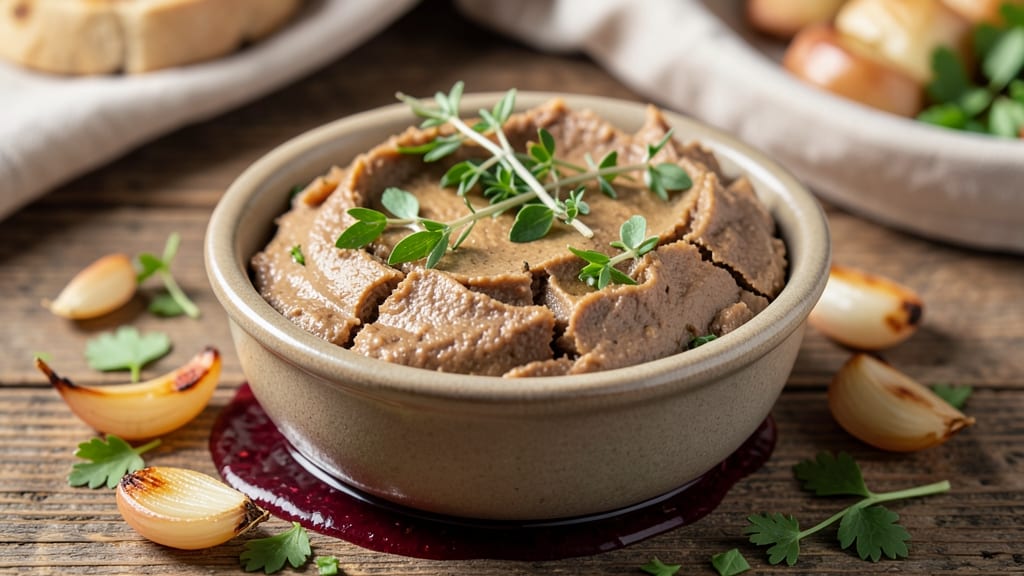
This baked chicken liver pâté delivers restaurant-quality richness in your home kitchen—silky texture, deep herbal notes, and that unmistakable livery depth that makes it unforgettable.
I remember my grandmother making something similar, though her recipe was scribbled on a napkin with just "one part liver, two parts fat, and a pinch of love." What I've perfected here is a method that ensures perfect texture every time, with no guesswork about doneness or consistency.
The secret lies in blending the livers with just the right amount of chicken fat and aromatics before baking—this creates that signature velvety texture while keeping the flavors concentrated.
Unlike store-bought versions, this pâté develops layers of flavor as it bakes, with crisp edges that contrast beautifully against the smooth interior. The key is patience: letting it cool completely before serving transforms it from a spreadable paste into something with proper structure.
What you'll end up with is a pâté that's rich enough to stand alone on crusty bread or crackers, yet balanced by bright herbs that cut through the intensity. The baking method ensures safety while developing those complex flavors, and the chilling step gives it that professional restaurant finish.
This isn't just a condiment—it's a centerpiece dish that elevates any meal from ordinary to extraordinary.
Perfect for holiday gatherings, dinner parties, or even a sophisticated weeknight supper when you want to impress without stress. The recipe scales beautifully, and leftovers keep well in the fridge for up to five days—though I can't guarantee they'll last that long in your house.
Let's make this pâté that tastes like it came from a Parisian bistro, not just your kitchen.
Ingredients for baked chicken liver pate
Rich, velvety texture starts with these carefully balanced ingredients—where livery depth meets herbal elegance.
| Ingredient | Amount | Notes |
|---|---|---|
| Chicken Livers 🍗 | 1 lb | Fresh, trimmed of connective tissue |
| Chicken Fat 🧈 | ½ cup | Rendered from skin or store-bought |
| Shallots 🧅 | 4 whole | Minced, for aromatic base |
| Garlic Cloves 🧄 | 4 cloves | Minced, for depth of flavor |
| Fresh Thyme Leaves 🌿 | ¼ cup | Finely chopped, for herbal brightness |
| Fresh Parsley Leaves 🌿 | ¼ cup | Finely chopped, for freshness |
| Fresh Tarragon Leaves 🌿 | ⅛ cup | Finely chopped, for anise notes |
| Dijon Mustard 🍯 | 2 tbsp | For tangy balance |
| Brandy 🍷 | 2 tbsp | Or substitute with cognac |
| Salt 🧂 | 1 tsp | Diamond Crystal preferred |
| Freshly Ground Black Pepper 🌶️ | ½ tsp | For subtle heat |
| Unsalted Butter 🧈 | 2 tbsp | For richness and binding |
| Heavy Cream 🥛 | ¼ cup | For silky texture |
The chicken livers are the heart of this pâté, so quality matters. Look for bright red, firm livers at your butcher or grocery store—avoid any with a metallic sheen or grayish tint. I always ask for them to be trimmed of connective tissue, which makes the texture so much smoother. For the chicken fat, render your own from skin if possible, but store-bought works in a pinch. The fat is non-negotiable—it's what creates that signature silky mouthfeel. Whole Foods or local butcher shops usually carry pre-rendered fat if you're short on time. Fresh herbs are a must here—dried just won't cut it for that bright, aromatic punch.
No brandy? Substitute with apple cider vinegar or even chicken stock for depth, though it'll lose that subtle anise note. Fresh tarragon is ideal, but if you can't find it, dried tarragon at one-third the amount works in a bind. The shallots should be finely minced—almost paste-like—for even distribution of flavor. For the butter, Plugrá or European-style brands melt beautifully and add richness. If you're making this ahead, the pâté actually improves after a day in the fridge as the flavors meld together. The key is patience—don't rush the chilling step, or it'll be too soft when serving.
This pâté keeps beautifully in the fridge for up to 5 days, though I can't promise it'll last that long in your house. For longer storage, portion into small ramekins and freeze for up to 3 months. The texture changes slightly when frozen—it becomes more firm—but a quick warm in the oven restores that silky quality. Serve at room temperature for the best experience. The pâté pairs perfectly with crusty baguette slices or water crackers, and a drizzle of extra virgin olive oil takes it to the next level. Make extra—it's that good.
Why You'll Love This Recipe
- One-Pan Magic: I swear by this recipe because it’s that simple—just toss the livers, shallots, and thyme into a dish, dot with chicken fat, and bake. No blender, no fuss, no cleanup that’ll make you question your life choices.
- Rich Without Effort: The chicken fat renders into pure luxury while baking, turning the pâte into something velvety and deep. Honestly, the first time I made it, I thought, "Wait, this is just… butter with flavor?" Nope—it’s better.
- Weeknight or Holiday: Spread it on crusty bread with a sprinkle of flaky salt for a quick lunch, or serve it chilled on crackers at a party. My in-laws asked for the recipe after one bite—(yes, even on a Tuesday night).
- Budget Luxury: Chicken livers are cheap, but they taste like you spent hours on a fancy dish. I make a double batch, store it in the fridge, and use it all week—no sad leftovers here, just happy seconds.
Step-by-step instructions for baked chicken liver pâté
Here's how to craft a velvety pâté with perfect texture and layered herbal complexity.
Prepare the Chicken Livers for Cooking
Begin by trimming away any connective tissue or silverskin from the 1 lb chicken livers using a sharp knife. This ensures a silky texture rather than chewy bits. Rinse them thoroughly under cold water to remove any blood, then pat completely dry with paper towels. The livers should be bone-dry before cooking—this prevents them from steaming instead of browning.
In a small bowl, whisk together the 2 tbsp Dijon mustard, 2 tbsp brandy, 1 tsp salt, and 0.5 tsp freshly ground black pepper. This marinade adds depth and prevents the pâté from becoming overly rich. Coat the livers evenly in the mixture and let them sit at room temperature for 15 minutes while you prepare the aromatics.
Sauté the Aromatics in Chicken Fat
Heat the 0.5 cup chicken fat in a large skillet over medium heat until it shimmers but doesn't smoke. Add the 4 minced shallots and cook for 3-4 minutes until translucent and just beginning to soften. This gentle cooking prevents them from burning, which would impart bitterness to the pâté.
Add the 4 minced garlic cloves and cook for another 30 seconds until fragrant—you should smell their sweet, pungent aroma. Immediately remove the skillet from heat and let the aromatics cool for 5 minutes. This step builds the flavor foundation while keeping the ingredients from overcooking, which is critical for a balanced pâté.
Cook the Livers Until Fully Done
Return the skillet to medium heat and add the marinated livers in a single layer. Cook undisturbed for 2-3 minutes until they develop a deep golden-brown crust on the bottom. Flip carefully and cook another 2-3 minutes until the livers are fully cooked through—you'll see the edges pull away from the pan and the internal temperature reach 160°F when checked with a meat thermometer.
Transfer the cooked livers to a food processor fitted with the metal blade. Add the cooled shallot and garlic mixture, 0.25 cup finely chopped fresh thyme leaves, 0.25 cup finely chopped fresh parsley leaves, and 0.125 cup finely chopped fresh tarragon leaves. Pulse until the mixture becomes a coarse paste but still retains some texture—this prevents the pâté from becoming too smooth and losing its character.
Blend and Emulsify the Pâté
Add the 2 tbsp unsalted butter and 0.25 cup heavy cream to the food processor. Pulse in 1-second bursts while scraping down the sides with a spatula to ensure everything incorporates evenly. The goal is to create a homogeneous but still slightly textured mixture—this is what gives traditional pâtés their luxurious mouthfeel.
Taste and adjust seasoning if needed. The pâté should be rich but balanced, with bright herbal notes cutting through the richness. Transfer the mixture to a heatproof ramekin or small baking dish and smooth the top with a spatula. Place the dish in a larger baking pan and fill the pan with hot water until it reaches halfway up the sides of the ramekin.
Bake to Perfection and Serve
Bake in a 350°F oven for 20-25 minutes until the center is just set but still slightly wobbly when gently shaken. This gentle baking ensures the pâté remains silky rather than becoming dry. Remove from the water bath and let cool at room temperature for 10 minutes before refrigerating for at least 2 hours—this allows the flavors to meld completely.
Serve chilled, accompanied by crusty bread, cornichons, or a simple green salad. The pâté should be rich, velvety, and bursting with herbal brightness. Each bite should deliver the deep umami of the chicken livers balanced by the bright tarragon and parsley, with just a hint of mustard's tangy bite.
Pro Tips For Making Baked Chicken Liver Pate
- Trim the Livers First: Chicken livers hold blood and bile, which turn bitter when cooked. Rinse them in cold water, then pat very dry with paper towels—this isn’t just about cleanliness, it’s about preventing a slimy, off-flavored pate. I learned this the hard way after making a batch that tasted like a metal locker.
- Sweat Shallots Low: Don’t rush the shallots—cook them on low heat with a splash of water for 8-10 minutes until they’re translucent and jammy. High heat caramelizes them too fast, turning them bitter. Sounds weird, but it works: this step is the flavor backbone of your pate.
- Avoid Overmixing the Paste: Once you blend the cooked livers, fat, and aromatics, stop stirring the moment it’s just combined. Overworking it makes the pate grainy and dense. I used to force it into submission like a stubborn dough—now I let it sit for 5 minutes after blending, and the texture stays silky.
- Use Rendered Fat: Skip the raw chicken fat chunks—render it first in a dry pan over medium heat until it’s liquid gold. Strain out any solids, then use it to cook the shallots and garlic. This ensures a smooth, rich base without chunks, and it’s the thing that matters most for a velvety texture.
Creative variations of these flavors
Herb Variations
Swap the fresh herbs for regional favorites. In Provençal style, replace tarragon with 1 tbsp dried lavender buds (infused in ¼ cup warm chicken fat for 10 minutes) and add 1 tbsp chopped rosemary.
For a Scandinavian twist, use ¼ cup chopped dill and 1 tbsp chopped chives—these bright notes balance the richness beautifully. 🌿
Spiced Adaptations
Add warmth with ½ tsp smoked paprika or ¼ tsp ground coriander during the sauté step for a smoky depth. For heat, stir in 1 tsp harissa paste with the brandy marinade.
My grandmother used to add a pinch of cayenne—just ⅛ tsp—for a subtle kick without overpowering the liver's natural richness.
Vegetable-Inspired Twists
For a vegetarian version, replace chicken livers with 1 lb finely chopped mushrooms (cremini or shiitake) and ½ cup cooked lentils—simmer them in the brandy marinade for 10 minutes before processing.
For earthy notes, add 1 tbsp walnut oil to the fat blend. The texture stays velvety, though slightly denser than traditional pâté.
Sweet Contrasts
Balance the richness with a sweet-savory profile by folding in 1 tbsp apricot jam or 2 tbsp caramelized onions into the final blend. A drizzle of honey (just 1 tsp) before baking adds a delicate sweetness that pairs perfectly with crusty bread.
This works especially well for holiday gatherings where guests expect something unexpected.
Global Flavors
Transform this into a Middle Eastern-inspired pâté by adding 1 tbsp ground cumin and ½ tsp cinnamon to the marinade, then finishing with 2 tbsp chopped mint.
For an Asian fusion, swap brandy for 1 tbsp soy sauce and add 1 tsp grated ginger and 1 tbsp chopped cilantro**. The umami depth remains, but with completely new flavor dimensions. 🌍
Nutrition facts
Frequently asked questions
Can I use beef liver instead of chicken liver for this recipe?
While you can substitute beef liver, it requires adjustments to avoid bitterness. Use 1.5 lbs beef liver (they're smaller than chicken livers) and soak them in 1 cup milk for 30 minutes before cooking to remove impurities. Also reduce the fat to 0.3 cup since beef liver is richer. The baking time remains the same, but beef liver pâté has a deeper, earthier flavor profile.
Why does my pâté turn out greasy instead of velvety?
Over-processing is usually the culprit! Stop blending when you see a coarse paste with some texture—this prevents excess fat release. Also ensure your livers are fully cooked (internal temp 160°F) before blending. If the pâté still seems too rich, add 1 tbsp extra heavy cream during processing to help emulsify properly.
Can I make this pâté ahead of time for a party?
Absolutely—this is one of its best features! Prepare it up to 3 days ahead and store in an airtight container in the fridge. The flavors actually deepen over time. For serving, bring it to room temperature for 30 minutes before slicing. If making 5+ days ahead, freeze in portions for up to 3 months—thaw overnight in the fridge.
What's the best way to serve this pâté?
This pâté shines as a centerpiece! Serve with crusty baguette slices or water crackers, and pair with cornichons or pickled vegetables to cut through the richness. For a complete meal, serve with a simple mixed greens salad dressed with lemon vinaigrette. The pâté also works beautifully on toasted rye bread with a smear of mustard.
How do I know when the pâté is fully cooked during baking?
Look for two key indicators: the center should be just set but still slightly wobbly when gently shaken, and the edges should be firm to the touch. A meat thermometer isn't ideal here, but if you have one, the internal temp should reach 160°F (though pâtés are more about texture than temperature). Overbaking will make it dry—remove it when it's just barely set.