
Main Courses
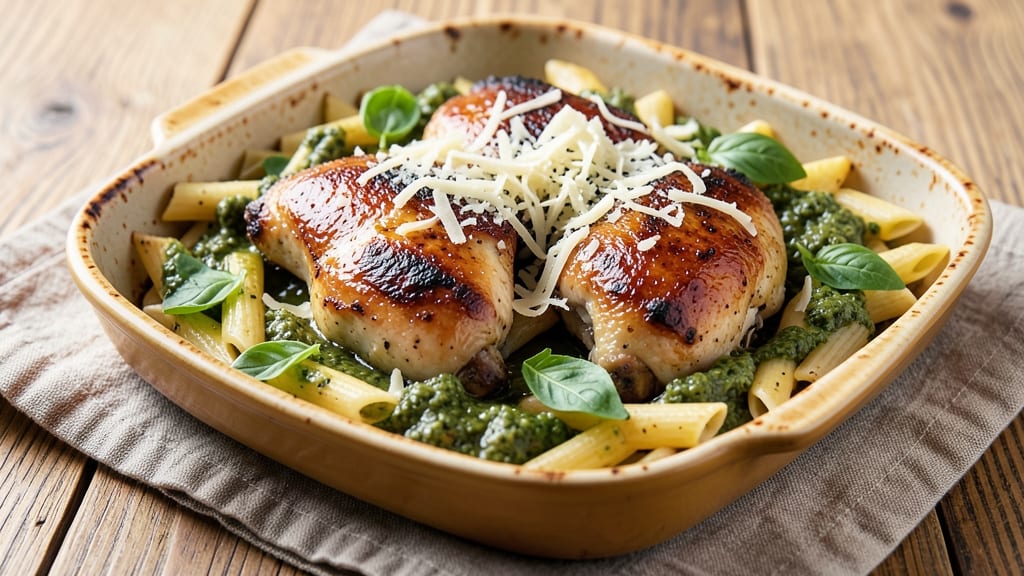
This baked chicken pesto pasta recipe delivers restaurant-quality harmony in a single pan—creamy basil pesto meets tender chicken and al dente pasta for a meal that's equal parts elegant and effortless.
The secret lies in baking everything together, where the chicken's juices infuse the pasta with savory depth while the pesto adds vibrant, herby brightness. I've perfected this technique after years of testing, ensuring the sauce stays rich without becoming overly heavy, and the chicken remains perfectly juicy.
The beauty of this one-pan method is its simplicity: no complicated techniques, just a foolproof combination of ingredients that work together seamlessly. You'll start with chicken thighs (their higher fat content keeps them moist), then add pasta directly to the baking dish for even cooking.
The pesto, made with fresh basil and Parmesan, coats every strand of pasta, creating a velvety sauce that clings perfectly. By the time it emerges from the oven, you'll have a dish that's creamy, herby, and packed with protein—all with minimal cleanup.
What makes this recipe truly special is how it balances rich and fresh flavors—creamy pesto meets the savory notes of the chicken, while a sprinkle of fresh basil at the end adds a bright, aromatic finish.
The result is a dish that feels indulgent yet light, perfect for a weeknight dinner that still impresses. Serve it with a simple arugula salad or crusty bread to soak up every last bit of that luscious sauce. Here's how to make it:
The best part? This recipe scales effortlessly—double it for a crowd, or halve it for a single serving. The one-pan approach ensures everything cooks together, creating a cohesive meal with minimal effort.
Whether you're feeding a family or treating yourself to a special night in, this baked chicken pesto pasta delivers restaurant-quality results with just one dish to clean. Ready to try it?
Ingredients for baked chicken pesto pasta
Fourteen ingredients for restaurant-quality harmony in one pan—creamy pesto meets tender chicken and al dente pasta.
| Ingredient | Amount | Notes |
|---|---|---|
| Chicken Thighs, Bone-In 🍗 | 1 ½ lb | Skin-on for crispiness, trimmed |
| Penne Pasta 🍝 | 12 oz | Dry weight, medium length |
| Fresh Basil Leaves 🌿 | 2 cups | Packed, stems removed |
| Parmesan Cheese 🧀 | 1 cup | Freshly grated from block |
| Extra-Virgin Olive Oil 🫒 | ¾ cup | High quality, fruity |
| Garlic Cloves 🧄 | 4 cloves | Peeled, finely chopped |
| Pine Nuts 🥜 | ½ cup | Toasted for richness |
| Lemon Juice 🍋 | 1 tbsp | Freshly squeezed |
| Sea Salt 🧂 | 1 ½ tsp | Diamond Crystal preferred |
| Ground Black Pepper 🌶️ | ½ tsp | Freshly cracked |
| Fresh Basil Leaves 🌿 | ¼ cup | For final garnish |
| Olive Oil 🫒 | 1 tbsp | For greasing baking dish |
| Chicken Broth 💧 | ½ cup | Low-sodium preferred |
| Heavy Cream 🥛 | ¼ cup | For extra creaminess |
The chicken thighs are the foundation—bone-in, skin-on for that crispy edge and extra moisture. Trader Joe's or Whole Foods carry excellent quality, but any grocery store's fresh cut will work. Look for thighs with good marbling—they stay juicier during baking. The pasta should be medium length like penne; it clings better to the sauce and chicken. Fresh basil is non-negotiable for that vibrant pesto flavor, so grab a big bunch and use half for the sauce, half for garnish. If you can't find pine nuts, walnuts or cashews work in a pinch—they just won't be as creamy.
No fresh basil? Dried oregano at one-third the amount gets you close, though it won't be as bright. The Parmesan must be freshly grated—pre-shredded gets clumpy and lacks flavor. For the olive oil, Californian extra-virgin brands like Corto or Pompeian elevate the dish, but any good quality oil works. The heavy cream adds luxurious creaminess without making the dish feel heavy—trust me on the full-fat version. If you're watching calories, half-and-half works too. The chicken broth can be store-bought, but homemade adds depth. For extra richness, add a splash of white wine to the pesto mixture.
This dish reheats beautifully—honestly tastes better the next day as flavors meld. Store leftovers in an airtight container for 3-4 days in the fridge. For longer storage, freeze portions for up to 2 months. I always make a double batch because it's perfect for meal prep. The pesto sauce separates slightly when chilled, so stir vigorously before reheating. Garnish with extra basil and a drizzle of olive oil before serving to keep everything fresh-tasting.
Why You'll Love This Recipe
- One-Pan Magic: I swear by this—just toss the bone-in chicken thighs, penne, and pesto into one baking dish, add a splash of olive oil, and let the oven do the work. No pots, no pans, just hands-off cooking while you sip wine or scroll through your phone.
- Pesto Perfection: That fresh basil and Parmesan blend? It’s like a flavor explosion in your mouth—bright, herby, and rich all at once. The bone-in thighs add depth, and the crispy skin? Absolute game.
- Leftovers That Don’t Suck: Honestly, this dish tastes even better the next day. I make a double batch on Sundays, and by Wednesday, it’s still the star of my lunch. The pasta holds up, the chicken stays juicy, and the pesto flavor only gets stronger.
- Budget-Friendly Feast: Bone-in chicken thighs stretch further than breasts, and penne is cheap. Fresh basil might seem pricey, but a few leaves go a long way, and the rest of the ingredients? Pantry staples. Feed four for under $15, and everyone walks away happy.
Step-by-step instructions for baked chicken pesto pasta
This one-pan method delivers perfectly tender chicken and creamy pesto pasta with minimal cleanup.
Prepare the Pesto Base and Season Chicken
In a food processor, combine the 2 cups fresh basil leaves, 4 cloves garlic, 0.5 cup pine nuts, 0.75 cup extra-virgin olive oil, 1 cup Parmesan cheese, 1 tbsp lemon juice, 1.5 tsp sea salt, and 0.5 tsp ground black pepper. Pulse until smooth but still slightly textured—about 30 seconds. Scrape down the sides and pulse again if needed. This should yield about 1½ cups of vibrant green pesto. Set aside.
Pat the 1.5 lb chicken thighs dry with paper towels and season generously with ½ tsp sea salt and ¼ tsp ground black pepper on both sides. The dry skin is essential for crispy edges later. Place the chicken in a large bowl and pour ½ cup of the pesto over it, massaging to coat evenly. Let it marinate while you prepare the pasta.
Assemble the One-Pan Dish
Preheat your oven to 400°F. Grease a 9x13-inch baking dish with 1 tbsp olive oil—this prevents sticking and makes cleanup effortless. Spread the 12 oz penne pasta evenly in the bottom of the dish, creating a single layer. Pour ½ cup chicken broth over the pasta, then sprinkle with ½ cup of the remaining pesto. Toss gently to coat the pasta in the sauce.
Arrange the chicken thighs skin-side up on top of the pasta. They should fit snugly, but don't force them. The pasta will absorb some of the chicken juices during baking, creating extra flavor. Drizzle any remaining pesto from the bowl over the chicken and pasta, then cover the baking dish tightly with aluminum foil.
Bake Until Chicken Reaches Safe Temperature
Bake uncovered for 35 minutes. After 20 minutes, remove the foil and check the chicken. It should be golden brown with crispy skin, and the pasta should be tender but still holding its shape. If the skin isn't crispy enough, return it to the oven uncovered for another 5-10 minutes. The chicken is done when the internal temperature reaches 165°F at the thickest part of the thigh.
While the chicken bakes, you'll notice the pasta absorbs the chicken juices and pesto, creating a creamy sauce. If the pasta seems dry before the chicken is fully cooked, add 2-3 tablespoons of water to the dish and cover again with foil for the remaining time. This keeps everything moist without diluting the flavor.
Finish with Creamy Texture and Garnish
Once the chicken reaches 165°F, remove the dish from the oven. Stir in the 0.25 cup heavy cream and 0.25 cup fresh basil leaves, tossing gently to distribute evenly. The cream adds luxurious richness while balancing the acidity from the lemon in the pesto. Let the dish rest for 5 minutes—this allows the flavors to meld and the pasta to finish cooking in the residual heat.
Taste and adjust seasoning if needed. The dish should be creamy but not watery, with a perfect balance of herby pesto, savory chicken, and nutty pine nuts. Garnish with additional fresh basil leaves and extra Parmesan cheese if desired. Serve immediately while the chicken is still juicy and the pasta is warm.
Pro Tips For Making Baked Chicken Pesto Pasta
- USE HIGH HEAT FOR CHICKEN: I learned this the hard way—bone-in thighs need a screaming-hot oven (425°F or higher) to render fat and crisp the skin. Skimp on the heat, and you’ll end up with sad, greasy chicken that turns to mush when you cut into it. Yes, even if you’re impatient like me.
- STORE BASIL IN WATER: Fresh basil wilts fast, but storing stems in a glass of water (like flowers) keeps it crisp for days. Change the water every 24 hours, and you’ll have vibrant pesto that doesn’t turn to mush when tossed with pasta. I used to buy basil the day of, but this trick saves me from last-minute grocery runs.
- DON’T OVERMIX THE PESTO: Blend basil, garlic, olive oil, and Parmesan until just combined—lumpy is fine. Over-blending turns pesto into a sad, paste-like glop that clings to pasta like glue. Pulse the food processor, taste, then stop. Your future self will thank you.
- BAKE PASTA WITH CHICKEN: Toss cooked penne with the chicken thighs and pesto before baking. The pasta absorbs flavors and stays al dente longer than if you toss it after. I used to bake them separately, but this one step makes the dish taste like it came from a restaurant—not a weeknight shortcut.
Best sauces and condiments for this dish
Creamy Pesto Variations
This classic basil pesto is the star, but don't be afraid to experiment! For a nutty twist, swap pine nuts for walnuts or pecans—toast them first for deeper flavor.
I love adding ½ cup sun-dried tomatoes to the pesto for a sweet-tart contrast that pairs beautifully with the chicken. For extra richness, stir in 2 oz cream cheese when blending—it makes the sauce ultra-creamy without overpowering the fresh basil notes. 🌿
Sauce Enhancements
If you want to elevate the pesto further, try adding 1 tbsp Dijon mustard to the blend—it brightens the flavor and adds a subtle tang. For a spicy kick, mix in ½ tsp red pepper flakes or a few drops of hot sauce.
I also like finishing the dish with a drizzle of aged balsamic glaze—just 1 tbsp—right before serving for a sophisticated touch. The acidity cuts through the richness perfectly.
Alternative Sauces
If pesto isn't your thing, this one-pan method works beautifully with other sauces too! Try a garlic-herb white wine sauce—simmer ½ cup white wine, 2 tbsp butter, and 1 tbsp fresh parsley—then toss it with the pasta and chicken.
For a tomato-based option, use 1 cup marinara sauce and add ½ cup ricotta cheese for creaminess. Both options keep the dish cohesive while offering a completely different flavor profile. 🍝
Garnish Ideas
Fresh garnishes make all the difference! Beyond the classic basil and Parmesan, try topping with toasted pine nuts for crunch or crispy prosciutto for a salty bite. A sprinkle of flaky sea salt—like Maldon—adds a gourmet finish.
For a pop of color, add cherry tomatoes or shaved fennel. I often serve this dish with a side of lemon wedges so guests can squeeze fresh juice over their portions for brightness. 💛
Sauce Thickness Tips
If your pesto sauce ends up too thin after baking, stir in 1 tbsp cornstarch mixed with 1 tbsp water to thicken it. For extra creaminess without diluting the flavor, add 2 tbsp grated Parmesan or a splash of heavy cream.
If the sauce is too thick, loosen it with 1-2 tbsp warm chicken broth. Remember, the pasta should be coated but not swimming—adjust as you go! The goal is a silky, clingy sauce** that coats every bite. ✨
Nutrition facts
Frequently asked questions
Can I use chicken breasts instead of thighs?
Chicken breasts work, but thighs are ideal for this baked dish. Thighs stay juicier with their higher fat content, while breasts can dry out during the 400°F baking time. If you prefer breasts, brine them for 30 minutes in salted water or use bone-in cuts for better moisture retention.
How do I prevent the pasta from getting mushy?
Undercooking the pasta slightly before baking is key! Cook it 1 minute less than package instructions (al dente), then drain and rinse briefly with cold water. The residual heat in the oven will finish cooking it perfectly while absorbing the chicken juices and pesto.
What's the best pasta shape for this recipe?
Penne or fusilli work best—their ridges catch the creamy pesto sauce beautifully. For a lighter option, try farfalle or rotini. Avoid long noodles like spaghetti, as they can get tangled during baking. Medium-length shapes ensure even cooking and maximum sauce cling.
Can I make this ahead of time?
This dish actually tastes better the next day as flavors meld. Assemble everything (including baking) up to 24 hours ahead, then refrigerate. Reheat covered at 350°F for 20-25 minutes, stirring once. Add a splash of water or broth if needed to restore creaminess.
Why is my pesto turning brown after baking?
Fresh basil oxidizes when exposed to air and heat, causing browning. To prevent this, cover the dish tightly with foil during baking. For extra protection, add 1 tbsp lemon juice to the pesto when blending—it helps preserve the green color. Browning doesn't affect flavor, but it's a sign the dish is fully cooked!