
Main Courses
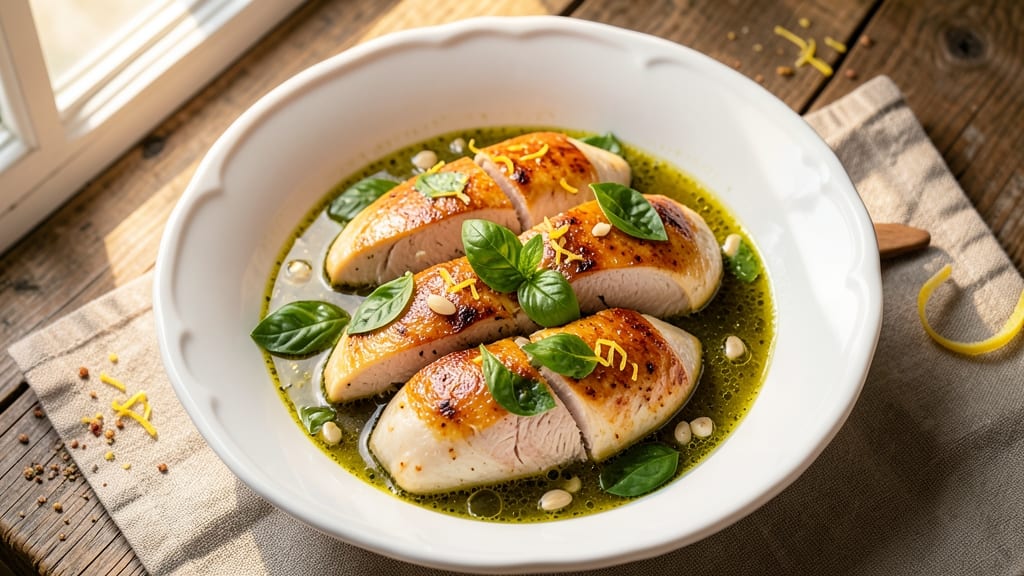
This baked lemon basil chicken recipe delivers juicy, herb-infused perfection with crisp edges and tender centers—no skillet required. The secret lies in marinating the chicken overnight, allowing the bright citrus and aromatic basil to penetrate deeply while keeping the meat impossibly moist.
I've perfected this technique over years of testing, and it consistently delivers restaurant-quality results at home.
The magic happens when you bake the chicken at high heat, creating a golden crust that locks in all those vibrant flavors. Fresh basil and zested lemon create a fragrant aroma that fills your kitchen long before the timer goes off, while a touch of garlic adds depth without overpowering.
The recipe uses simple pantry staples but transforms them into something extraordinary with minimal effort.
What you'll end up with is chicken that's perfectly balanced—juicy throughout with a crisp exterior that holds up beautifully when sliced. The lemon-basil marinade infuses the meat with bright, herby notes that cut through the richness, making every bite feel fresh and vibrant.
This dish pairs perfectly with roasted vegetables or a simple salad, creating a complete meal in under an hour.
Whether you're cooking for a weeknight dinner or preparing for a gathering, this recipe delivers consistent results with minimal fuss.
The marinade can be made ahead, and the baking process is hands-off, allowing you to focus on other elements of your meal while the chicken does its thing in the oven.
Ingredients for baked lemon basil chicken
Juicy chicken with crisp edges and vibrant lemon-basil aroma—just 12 ingredients for restaurant-quality flavor.
| Ingredient | Amount | Notes |
|---|---|---|
| Boneless, Skinless Chicken Breasts 🍗 | 1 ½ lb | Pounded to even thickness |
| Fresh Lemon Juice 🍋 | ½ cup | Freshly squeezed from 2-3 lemons |
| Fresh Basil Leaves 🌿 | 1 cup | Packed, stems removed |
| Garlic Cloves 🧄 | 6 cloves | Minced for marinade |
| Extra-Virgin Olive Oil 🫒 | ¼ cup | For marinade and brushing |
| Diamond Crystal Kosher Salt 🧂 | 1 ½ tsp | For seasoning and marinade |
| Ground Black Pepper 🌶️ | ½ tsp | Freshly ground preferred |
| Dried Oregano 🍃 | ½ tsp | For additional depth |
| Zest of 1 Large Lemon 🍋 | 1 tbsp | Bright citrus flavor |
| All-Purpose Flour 🌾 | ½ cup | For dredging chicken |
| Unsalted Butter 🧈 | 2 tbsp | Melted for basting |
| Freshly Grated Parmesan Cheese 🧀 | ¼ cup | For finishing touch |
The chicken breasts are the foundation—look for evenly sized pieces at Whole Foods or your local butcher for the best texture. Pounding them to even thickness ensures they cook uniformly. Fresh basil is non-negotiable here; grab a bunch from the grocery store's produce section or a farmers market for that bright, aromatic punch. The lemon juice should be freshly squeezed—bottled just doesn't cut it. For the olive oil, any good extra-virgin brand works, but avoid the cheap stuff that tastes like soap. I always buy mine in bulk from Costco for better value.
No fresh basil? Dried oregano at half the amount works in a pinch, though it won't have that same vibrant flavor. Substituting bottled lemon juice is fine, but you'll miss the fresh zest's brightness. For the garlic, powdered garlic works but lacks depth. If you're out of kosher salt, use sea salt at a 1:1 ratio. The flour is just for dredging—any all-purpose brand is fine, but if you've got cornstarch, use that instead for extra crispiness. The butter should be unsalted to control the seasoning perfectly, and the Parmesan adds that final umami touch—grate it yourself for the best texture.
Marinate the chicken overnight for maximum flavor penetration, then store it in an airtight container in the fridge. The marinade itself keeps for 3 days if stored properly. Once baked, the chicken reheats beautifully—just 10 seconds in the microwave with a splash of water to keep it moist. For make-ahead meals, bake the chicken, let it cool, then portion into containers. It stays fresh for 3-4 days in the fridge or 3 months in the freezer. The leftovers make an amazing sandwich filling or salad topper.
Why You'll Love This Recipe
- That’s the secret: baking the chicken until the edges are golden and crisp, but the inside stays juicy as can be. The lemon brightens everything, the basil adds that fresh, herby punch, and the garlic? Oh, it’s there—just enough to make it sing.
- Foolproof Timing: I swear by this—no waiting around for the oven to preheat forever. Toss the chicken in the marinade (lemon, basil, garlic, olive oil), pop it in while the oven’s still cold, and walk away. Thirty minutes later, you’ve got dinner without the stress.
- Crispy-Creamy Magic: That’s the secret: baking the chicken until the edges are golden and crisp, but the inside stays juicy as can be. The lemon brightens everything, the basil adds that fresh, herby punch, and the garlic? Oh, it’s there—just enough to make it sing.
- Meal Prep MVP: Between us, this is my go-to for lunches. Cook a whole tray on Sunday, slice it up, and you’ve got protein-packed meals for the week. Pack it with greens or throw it in a wrap—it’s that versatile. (Yes, even on a Tuesday night.)
Step-by-step instructions for baked lemon basil chicken
Here's how to create tender, juicy chicken with vibrant lemon-basil flavors that shine through every bite.
Marinate the Chicken for Maximum Flavor
In a large bowl, combine the 0.5 cup fresh lemon juice, 1 cup fresh basil leaves, 6 minced garlic cloves, 0.25 cup extra-virgin olive oil, 1.5 teaspoons diamond crystal kosher salt, 0.5 teaspoon ground black pepper, 0.5 teaspoon dried oregano, and 1 tablespoon lemon zest. Whisk until fully integrated and the mixture emits a bright, aromatic scent.
Place the 1.5 lb boneless, skinless chicken breasts between two sheets of plastic wrap and pound gently to an even ½-inch thickness using a meat mallet. This ensures even cooking. Transfer the pounded chicken to the marinade, turning to coat completely. Cover and refrigerate for at least 4 hours, or ideally overnight. The acidity from the lemon will tenderize the chicken while infusing it with vibrant flavor.
Prepare the Flour Dredge and Basting Butter
In a shallow dish, combine the 0.5 cup all-purpose flour with an additional ½ teaspoon diamond crystal kosher salt and ¼ teaspoon ground black pepper. This creates a light, crispy coating that will complement the tender chicken. Melt the 2 tablespoons unsalted butter in a small saucepan over low heat until just melted—don't let it brown. Set aside for basting.
Remove the marinated chicken from the refrigerator and let it sit at room temperature for 15-20 minutes before cooking. This ensures even heat distribution. Pat the chicken dry with paper towels to remove excess marinade, which helps the flour adhere better and creates a crispier crust.
Dredge and Bake for Perfect Texture
Preheat your oven to 400°F and line a baking sheet with parchment paper. Working in batches if needed, press each piece of chicken into the flour mixture, coating it evenly on all sides. Tap off any excess flour—you want a light, even layer. Transfer the dredged chicken to the prepared baking sheet.
Bake for 12-15 minutes, until the chicken reaches an internal temperature of 165°F and the edges are golden brown. About halfway through baking, use a pastry brush to baste the chicken with the melted butter. This adds richness and helps create a beautiful, glossy finish. If the butter starts to brown too quickly, reduce the oven temperature to 375°F for the final few minutes.
Finish with Fresh Basil and Parmesan
Once the chicken is fully cooked, remove it from the oven and let it rest for 5 minutes on a wire rack. This resting period allows the juices to redistribute, ensuring each bite is moist and flavorful. While the chicken rests, finely chop the remaining fresh basil leaves and set aside.
Just before serving, sprinkle the chicken generously with the 0.25 cup freshly grated parmesan cheese and the chopped basil. The parmesan adds a salty, umami depth, while the fresh basil brightens the dish with its aromatic freshness. Serve immediately with a squeeze of extra lemon juice if desired—this dish tastes best while the chicken is still warm and the flavors are at their peak.
Pro Tips For Making Baked Lemon Basil Chicken
- Pound the Chicken First: I learned this the hard way—skipping the pound makes for uneven cooking and dry edges. Use a meat mallet or rolling pin to flatten breasts to ¼-inch thickness before seasoning; this ensures they cook through without overcrowding the pan.
- Zest Before Juicing: That bright citrus punch comes from the zest, not just the juice. Use a microplane to add 1 teaspoon of lemon zest to the marinade—it cuts through the richness of the olive oil and adds a floral note the basil alone can’t match.
- Don’t Overcrowd the Pan: I used to bake all four breasts at once, and they’d steam instead of brown. Arrange them in a single layer with ½-inch gaps, and if needed, bake in batches. The air needs room to circulate for that crispy, golden crust.
- Add Basil Late: Tossing in the basil at the start means it wilts into a sad, mushy pile. Instead, sprinkle the leaves over the chicken in the last 5 minutes of baking—they’ll crisp slightly and release their aroma when hot. (Yes, even if you’re impatient like me.)
Common mistakes when making perfect results
Over-Marinating Risks
Leaving chicken in the marinade for more than 12 hours can break down the meat fibers too much, resulting in a mushy texture. The acidity in lemon juice is great for flavor but can become overpowering.
I’ve seen this happen when people forget about their chicken overnight—it’s still safe to eat, but the texture suffers. Stick to the 4-12 hour window for best results. 🌶️
Skipping the Pounding
Uneven thickness means uneven cooking—thicker parts stay tough while thinner sections dry out. I always pound chicken breasts to ½-inch thickness using a meat mallet or rolling pin. This ensures every bite cooks at the same rate, giving you perfectly juicy chicken every time.
A Whole Foods butcher can help with this if you’re not comfortable doing it yourself.
Not Drying the Chicken
Wet chicken won’t crisp up properly when coated in flour. Always pat your chicken dry with paper towels before dredging. I’ve made this mistake and ended up with soggy, flavorless crusts.
The key is to remove as much moisture as possible—this is especially important if you’ve marinated the chicken for a long time. A quick pat dry makes all the difference. ✨
Overcrowding the Pan
If you stack chicken breasts too closely on the baking sheet, they’ll steam instead of crisp up. Leave at least 1 inch of space between each piece. I like to use a parchment-lined sheet and arrange the chicken in a single layer.
Overcrowding also makes it harder to baste evenly with butter, which is crucial for that golden finish. 🔥
Ignoring Resting Time
Cutting into chicken immediately after baking causes juices to spill out, leaving you with dry meat. Always let the chicken rest for 5 minutes on a wire rack.
This simple step lets the juices redistribute, ensuring every bite is moist and flavorful. I’ve seen people skip this and end up with disappointing results—don’t make that mistake!
Using Bottled Lemon Juice
Bottled lemon juice lacks the fresh zest and brightness that fresh lemon juice provides. The flavor profile changes dramatically, and your dish won’t have that vibrant, restaurant-quality taste. If you’re short on time, freshly squeezed juice is worth the extra effort.
I always use 2-3 fresh lemons for the best results—it’s a small sacrifice for big flavor payoff. 🍋
Nutrition facts
Frequently asked questions
Can I use chicken thighs instead of breasts?
Yes! Chicken thighs work beautifully in this recipe—they stay juicier and add richer flavor. Just increase the baking time to 20-25 minutes at 400°F (thighs cook slower than breasts) and check for 165°F internal temperature. The marinade will penetrate the meat perfectly, creating tender, flavorful bites.
How do I store leftovers?
Store cooked chicken in an airtight container in the fridge for up to 4 days or freeze for 3 months. For reheating, warm in a skillet with a splash of water for 2-3 minutes per side on medium heat or microwave for 15 seconds per slice covered with a damp paper towel. The lemon-basil flavors hold up beautifully!
What's the best way to serve this dish?
This herb-infused chicken pairs perfectly with roasted vegetables, garlic mashed potatoes, or a fresh arugula salad. For a complete meal, try serving with lemon-herb roasted asparagus or crusty bread to soak up the juices. The bright citrus flavors complement earthy sides beautifully—think roasted carrots or sautéed spinach.
Can I make this recipe without fresh basil?
Yes, but the flavor will be less vibrant. Use 1 tablespoon dried basil (or 1 teaspoon basil extract) as a substitute, but remember it won't have the same aromatic freshness. For extra depth, add ½ teaspoon dried thyme to complement the lemon notes. Fresh basil is ideal, but this works in a pinch!
Why did my chicken turn out dry?
Most likely, you skipped the resting time or overcooked it. Always let chicken rest for 5 minutes after baking to redistribute juices. Also check your oven temperature—400°F is crucial. If using a meat thermometer, remove chicken at 160°F (it'll rise to 165°F** while resting). Overbaking is the #1 cause of dry chicken!