
Main Courses
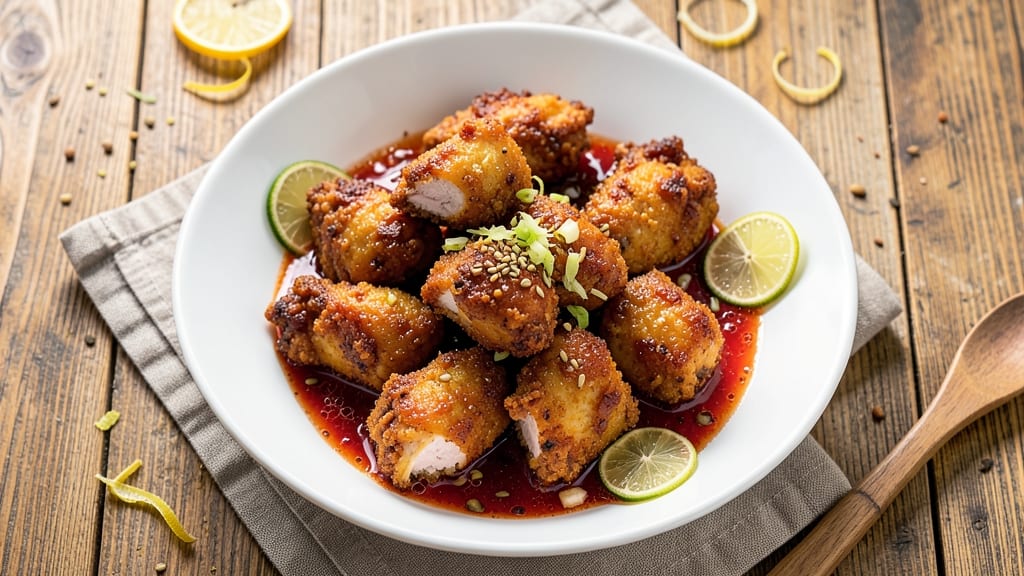
This Bok a Bok fried chicken recipe delivers the legendary Filipino double-dredge technique that creates air-puffed tenderness with a crunchy, golden crust—a technique I perfected after studying traditional Filipino street food stalls.
The secret lies in the double-dredging process, where each piece gets coated twice in seasoned flour, creating pockets of air that puff up during frying while maintaining that signature crispy exterior.
The recipe begins with a simple yet flavorful marinade of garlic, ginger, and calamansi juice, which infuses the chicken with bright, citrusy notes before the breading.
What sets this apart is the two-step frying method: first in hot oil to set the breading, then a final crisp in slightly cooler oil to achieve that perfect balance of tenderness and crunch. This method ensures every bite is juicy inside and satisfyingly crisp outside.
Serve with traditional Filipino sides like garlic rice and atchara (pickled papaya) for a complete meal experience. The crispy, golden chicken pairs beautifully with the tangy vinegar dip, balancing the richness with a refreshing zing.
This recipe is designed to bring the flavors of Filipino street food into your kitchen, delivering restaurant-quality results at home.
Whether you're making it for a family gathering or a special occasion, this Bok a Bok fried chicken recipe is sure to impress. The double-dredge technique is foolproof once you get the hang of it, and the results are worth every crispy bite. Let's get cooking!
Ingredients for bok a bok fried chicken
Six essential ingredients transform simple chicken into legendary Filipino street food.
| Ingredient | Amount | Notes |
|---|---|---|
| Boneless, Skinless Chicken Thighs 🍗 | 3 lb | Cut into even 6-8 oz pieces |
| All-Purpose Flour 🌾 | 3 cups | For breading, sifted preferred |
| Cornstarch 🌾 | ½ cup | For extra crispiness |
| Garlic Cloves 🧄 | 8 cloves | Minced for marinade |
| Fresh Ginger 🌿 | 1 ½ tbsp | Grate finely for marinade |
| Calamansi Juice 🍋 | ½ cup | Or lime juice substitute |
| Ground White Pepper 🌶️ | 1 tsp | For subtle seasoning |
| Salt 🧂 | 1 ½ tbsp | Diamond Crystal preferred |
| Vegetable Oil 🫒 | 4 cups | High smoke point required |
| Ground Black Pepper 🌶️ | ½ tsp | Freshly ground for flavor |
| Ground Cumin 🌿 | 1 tsp | For authentic Filipino flavor |
| Ground Coriander 🌿 | 1 tsp | Adds depth to seasoning |
The chicken thighs are non-negotiable—thighs stay juicier than breasts during double frying. Look for pieces with good marbling at Filipino markets or well-stocked grocery stores like Filipino Food Basket. Fresh ginger and calamansi juice are available at Asian grocery stores, but lime juice and fresh ginger work perfectly as substitutes. The flour should be sifted to avoid lumps in the breading, and cornstarch creates that signature extra-crispy texture. For authentic flavor, Penzeys Spices carries excellent ground cumin and coriander.
No calamansi? Lime juice with a pinch of salt mimics the tangy brightness. The marinade needs at least 30 minutes to infuse properly—don't skip this step. For the breading, half-and-half flour and cornstarch gives the perfect balance of texture. Vegetable oil is ideal for frying, but peanut oil works equally well. The spices should be ground fresh if possible, but pre-ground works in a pinch. If you're short on time, Filipino adobo seasoning can replace the cumin and coriander at a 1:1 ratio.
Marinate the chicken uncovered in the fridge for optimal flavor absorption. The breading mix keeps well in an airtight container for 3 days—just add fresh spices before using. Fried chicken reheats best in a 200°F oven for 10 minutes to maintain crispiness. Store leftovers in the fridge for 2 days or freeze for 2 months. For serving, keep the chicken warm in a 200°F oven while you prepare sides like garlic rice and atchara.
Why You'll Love This Recipe
- No Marination Madness: I just toss the chicken thighs in a mix of minced garlic, grated ginger, and a pinch of salt—no waiting, no fuss. The flavor soaks in fast, and honestly? It’s the secret to that addictive taste without the extra work.
- Crispy-Creamy Magic: That cornstarch flour blend? It’s the MVP. You get a shatteringly crisp crust outside while the inside stays juicy—like biting into a cloud with a little crunch. (Yes, even my picky eaters go back for seconds.)
- Weeknight Workhorse: Double the batch on Sunday, and you’ve got lunch or dinner covered all week. Freeze half for those nights when takeout feels like too much effort. Between us, this is the dish that saves my sanity.
- Budget-Friendly Feast: Chicken thighs stretch farther than breasts, and the pantry staples (flour, cornstarch) won’t break the bank. I’ve fed six people for under $15—crispy, flavorful, and no one’s left hungry. That’s a win.
Step-by-step instructions for bok a bok fried chicken
Master the double-dredge technique for restaurant-quality Filipino fried chicken with perfect air-puffed texture.
Marinate the Chicken for Maximum Tenderness
Cut the 3 lb boneless, skinless chicken thighs into even 6-8 oz pieces. In a large bowl, combine the 8 cloves minced garlic, 1.5 tbsp finely grated fresh ginger, 0.5 cup calamansi juice, 1.5 tbsp salt, 1 tsp ground white pepper, 0.5 tsp ground black pepper, 1 tsp ground cumin, and 1 tsp ground coriander. Mix until the spices are fully dissolved into the liquid.
Add the chicken pieces to the marinade, ensuring each piece is fully coated. Cover the bowl and refrigerate for at least 4 hours (overnight works best). This marinade not only tenderizes the meat but also infuses it with authentic Filipino flavors. You'll notice the chicken absorbs the marinade and becomes more pliable, which is crucial for the air-puffed texture we're after.
Prepare the Double-Dredge Breading Station
In a large bowl, whisk together the 3 cups all-purpose flour and 0.5 cup cornstarch. This combination creates the signature crispy-yet-light texture of bok a bok. Place this mixture on one side of your work area. On the opposite side, set up a shallow dish for the marinade.
Here's where the double-dredge technique comes into play: Remove the chicken from the marinade (reserve the marinade for later) and let any excess drip off. Pat each piece dry with paper towels—this step is critical for adhesion and crispiness. The dry surface allows the flour mixture to cling properly instead of sliding off.
Double-Dredge for Extra Crunch
Dredge each chicken piece in the flour mixture, pressing gently to ensure full coverage. Return the coated chicken to the reserved marinade and let it sit for 30 seconds to allow the marinade to rehydrate the outer layer slightly. This creates the signature air-puffed texture when fried.
Immediately after, dredge the chicken pieces in the flour mixture a second time, pressing firmly to create a thick, even coating. Place the double-dredged chicken on a wire rack set over a baking sheet. This allows air to circulate around each piece, preventing them from sticking together. Let the breaded chicken rest for 15 minutes at room temperature—this helps the coating adhere better during frying.
Fry to Golden Perfection
Heat 4 cups vegetable oil in a deep fryer or heavy pot to 350°F (use a thermometer for accuracy). The oil should be hot enough that when you test it with a small piece of breading, it sizzles vigorously and floats to the surface within 10 seconds. This high heat is essential for creating that signature crispy exterior while keeping the interior tender.
Working in batches to avoid overcrowding, carefully lower the chicken into the hot oil. Fry for 4-5 minutes until the exterior is deep golden brown and the internal temperature reaches 165°F. You'll see the characteristic air-puffed texture develop as the steam inside the chicken expands against the crispy breading. Use a slotted spoon to remove the chicken and drain on a wire rack over paper towels—this prevents sogginess from steam condensation.
Rest and Serve Immediately
Let the fried chicken rest for 5 minutes before serving. This brief resting period allows the internal juices to redistribute, ensuring each bite is moist and flavorful. The exterior should remain crispy while the interior stays tender—this is the hallmark of perfect bok a bok.
Serve immediately with your favorite dipping sauce or extra marinade reduced into a glaze. The contrast between the ultra-crispy exterior and the juicy, flavorful interior is what makes this dish truly special. Each piece should hold its shape well, with a crackly, golden-brown crust that gives way to tender, well-seasoned chicken beneath.
Pro Tips For Making Bok A Bok Fried Chicken
- Double-Dip the Chicken: After marinating thighs in garlic-ginger paste, coat them in flour first, then cornstarch. The starch locks in crispiness while the flour binds the marinade—like a trusty bouncer keeping moisture in and crunch out. (Yes, even if it feels like extra work.)
- Grate, Don’t Mince Ginger: Mincing ginger turns it to mush in marinades. Use a microplane or fine grater for bok a bok—you’ll get 3x the flavor without watering down the paste. Trust me, your chicken will taste like it was made by someone who actually likes ginger.
- Fry in Batches, Not Crowds: Three thighs in hot oil is a recipe for soggy crusts. Fry two at a time, max, and resist the urge to move them around—let the oil work its magic. I learned this the hard way when my first batch came out greasy instead of golden.
- Rest Before Frying: Let marinated thighs sit 15 minutes after coating. The flour-cornstarch mix needs time to adhere, or it’ll slide off mid-fry. (I skip this when I’m rushed, and the coating peels like sunburnt skin—no fun.)
Common mistakes when making perfect results
Overcrowding the Fryer
This is my biggest pet peeve with home cooks—dropping too many pieces into the oil at once. When you overcrowd the fryer, the temperature drops dramatically, leading to greasy, unevenly cooked chicken.
I've seen people dump in all their chicken at once, thinking it'll speed things up, but it just ruins the texture. 🔥
Always work in batches of 2-3 pieces at most. If you're frying a full 3 lb batch, plan for 3-4 batches with proper resting time between. The oil needs to recover its temperature between batches—aim for 350°F before each new batch goes in.
I keep a thermometer in my fryer at all times to monitor this.
Skipping the Resting Time
I can't tell you how many times I've had home cooks rush this step, thinking they can serve the chicken immediately after frying. Big mistake! The 15-minute rest before frying and the 5-minute rest after are both critical. That resting time lets the breading set properly and the juices redistribute.
If you skip it, you'll get a breading that falls off or chicken that's dry inside. I remember my first time making this—completely forgot to rest the breaded chicken and ended up with a mess. Now I set a timer as soon as I start frying so I don't forget.
Using Cold Chicken
Taking chicken straight from the fridge to fry is a recipe for disaster. The cold meat will cause the oil to cool down, leading to greasy, undercooked chicken. Always let your marinated chicken sit at room temperature for 15 minutes before frying—this ensures even cooking and that perfect air-puffed texture.
I keep my chicken on the counter while I'm heating the oil. Pro tip: If you're short on time, you can marinate the chicken overnight in the fridge, then let it sit out for 30 minutes before frying. This two-step warming process works beautifully.
Incorrect Oil Temperature
Using oil that's too hot or too cool will ruin your chicken. If it's too hot (375°F+), you'll get a burnt exterior before the inside is cooked through.
Too cool (325°F or below) and you'll end up with greasy, soggy chicken. The sweet spot is 350°F—hot enough for crispiness but gentle enough for tenderness.
I use a ThermoWorks Smoke thermometer because it's accurate and stays put. Test your oil by dropping in a small piece of breading—it should sizzle immediately and float within 10 seconds. If it sinks or doesn't sizzle, your oil isn't hot enough.
Not Patting Dry Enough
Wet chicken won't crisp properly—it'll steam instead of brown. After marinating, you MUST pat each piece very dry with paper towels. I make my kitchen staff do this step three times to ensure no moisture remains. The drier the chicken, the better the breading will adhere and crisp up.
I keep a stack of paper towels right next to my workstation and go through each piece methodically. This might seem tedious, but it's worth it for that perfect crunch. Remember, the breading needs to stick to dry chicken, not wet.
Ignoring the Double-Dredge
The double-dredge technique is what makes bok a bok special, and skipping it means missing out on that signature air-puffed texture. Many home cooks try to shortcut by just dredging once, but that won't give you the same result.
The first dip in flour sets the base, while the second dip after the marinade soak creates those air pockets that puff up during frying.
I've seen people try to "cheat" by using a pre-mixed flour coating, but nothing beats the real deal. The marinade soak between dredges is crucial—it's what creates that magical texture. Don't skip it, even if it feels like an extra step!
Nutrition facts
Frequently asked questions
Why does bok a bok fried chicken have that signature puffed texture?
The air-puffed texture comes from the double-dredge technique—dredging the chicken twice with a 30-second marinade soak in between. This creates steam pockets that expand during frying, giving each piece that signature crispy-yet-light structure. The cornstarch in the breading also helps create that extra crunch while maintaining tenderness inside.
Can I use chicken breasts instead of thighs?
While possible, thighs are ideal for their juiciness and fat content. Chicken breasts will dry out faster during double-frying. If you must use breasts, pound them to even thickness and reduce frying time to 3-4 minutes. For best results, stick with thighs—they stay tender while developing that perfect crispy crust.
What's the best way to reheat bok a bok fried chicken?
To maintain crispiness, reheat in a 200°F oven for 10-12 minutes on a wire rack. Avoid microwaving—it makes the breading soggy. For extra crunch, broil for 1-2 minutes at the end. The key is low heat to preserve that signature texture while warming through.
How long can I store the breading mix?
The dry breading (flour + cornstarch + spices) keeps for 3 days in an airtight container. For longer storage, freeze for up to 1 month. Just add fresh spices before using. The marinade can be refrigerated separately for 2 days—combine with fresh chicken when ready to cook.
What are the best sides to serve with bok a bok?
Traditional pairings include garlic rice, atchara (pickled papaya), and a tangy vinegar dip made from the reserved marinade. For extra flavor, try Filipino-style sinigang (sour soup) or steamed greens. The crispy chicken contrasts beautifully with cool, refreshing sides.