
Main Courses
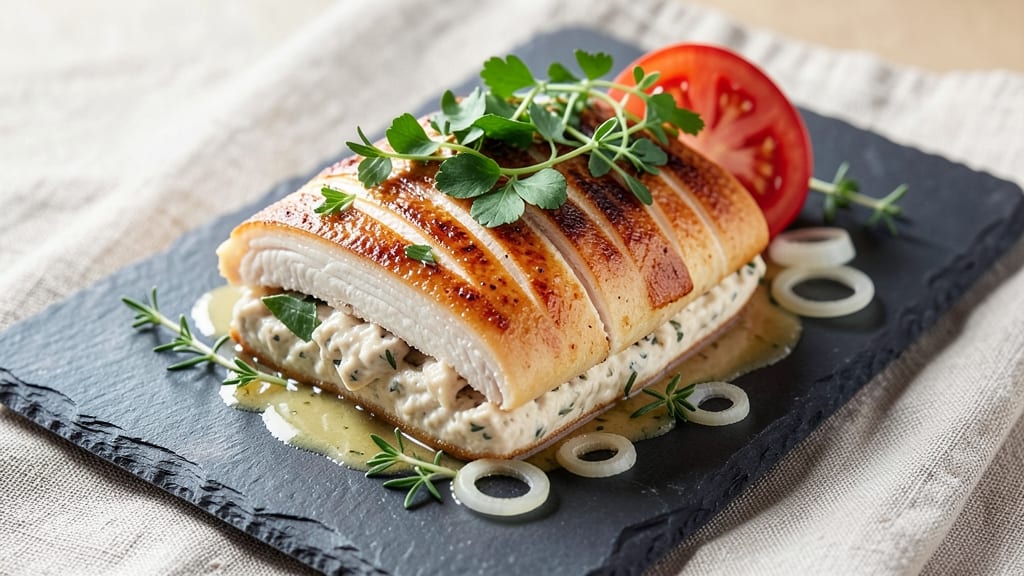
This chicken galantine recipe transforms a simple roasted chicken into an elegant, restaurant-worthy centerpiece with a crisp celery crown and silky herb-stuffed interior. Inspired by classic French technique, this dish delivers tender, juicy chicken wrapped in a flavorful forcemeat—perfect for special occasions where you want to impress without fuss.
The key lies in layering flavors through slow cooking and precise assembly, ensuring every bite reveals both the richness of the herb filling and the delicate crunch of the celery topping.
The foundation of a perfect galantine begins with foolproof forcemeat—a blend of ground chicken, fresh herbs, and aromatic vegetables that infuses the chicken with deep, savory notes.
Unlike traditional recipes that require hours of preparation, this version streamlines the process while maintaining authenticity, using a one-pot poaching method to keep the chicken moist and tender. The celery crown, a signature element, adds both visual drama and satisfying texture, balancing the dish’s richness with a refreshing contrast.
What sets this recipe apart is its versatility—whether you’re serving it as the centerpiece of a holiday feast or a sophisticated weeknight dinner, the technique remains the same.
The forcemeat can be customized with mushrooms, spinach, or even a vegetarian alternative for added depth, while the celery crown ensures a crisp finish that elevates the dish.
With careful layering and a gentle baking process, you’ll achieve a result that’s both impressive and approachable, proving that classic techniques can yield modern, crowd-pleasing results.
The final plating is where the magic happens: a golden, crisp celery crown sits atop silky herb swirls, creating a dish that’s as beautiful as it is delicious. This recipe isn’t just about technique—it’s about transforming a simple chicken into a showstopper that feels like a labor of love.
Ready to master the art of the galantine? Let’s get started with the ingredients and steps that will take your cooking to the next level.
Ingredients for chicken galantine
Elegant French technique meets approachable home cooking with these carefully chosen ingredients for your chicken galantine.
| Ingredient | Amount | Notes |
|---|---|---|
| Whole Chicken Breast 🍗 | 1 ½ lb | Boneless, skin-on preferred |
| Ground Chicken Breast 🍗 | 1 lb | Freshly ground for texture |
| Fresh Parsley 🌿 | ½ cup | Chopped, stems removed |
| Fresh Sage 🌿 | ¼ cup | Chopped, leaves only |
| Fresh Thyme 🌿 | ¼ cup | Chopped, leaves only |
| Shallots 🧅 | 2 whole | Minced finely |
| Garlic Cloves 🧄 | 6 cloves | Peeled, minced |
| Celery Stalks 🥬 | 4 whole | Trimmed, cut into 1-inch pieces |
| Carrots 🥕 | 2 whole | Peeled, finely diced |
| Unsalted Butter 🧈 | ½ cup | Cold, cubed |
| Heavy Cream 🥛 | ½ cup | Full-fat preferred |
| Diamond Crystal Kosher Salt 🧂 | 1 ½ tsp | Divided for seasoning |
| Freshly Ground Black Pepper 🌶️ | ¾ tsp | Divided for seasoning |
| Chicken Stock 💧 | 2 cups | Homemade or high-quality |
| All-Purpose Flour 🌾 | 2 tbsp | For thickening |
| Extra-Virgin Olive Oil 🫒 | 2 tbsp | For brushing |
| Fresh Lemon Juice 🍋 | 1 tbsp | For acid balance |
The chicken breast is the foundation—choose a boneless, skin-on cut for optimal moisture retention. Whole Foods or high-end butchers carry the best quality, but any well-marbled breast will work. For the forcemeat, freshly ground chicken breast ensures a tender texture; pre-ground often contains fillers. The herb blend of parsley, sage, and thyme should be bright green and fragrant—wilted leaves indicate age. Shallots and garlic add depth, so don't skimp: Penzeys or bulk bins at specialty stores offer the freshest options. Celery and carrots should be crisp with vibrant color—Trader Joe's often carries pre-trimmed bundles for convenience.
No fresh herbs? Dried will work at one-third the amount, but flavor will be muted. Substitute shallots with finely minced red onion if needed, though shallots provide a more refined taste. For a vegetarian forcemeat, swap ground chicken for finely chopped mushrooms and walnuts (½ cup each). The butter should be cold and cubed—room temperature butter will create a greasy forcemeat. If you don't have Diamond Crystal kosher salt, Morton works, but measure carefully as it's saltier. The chicken stock can be store-bought, but homemade adds depth—Kitchen Basics or Pacific Foods brands are reliable choices.
Store fresh herbs wrapped in damp paper towels in a sealed container for up to 5 days. The forcemeat mixture can be prepped 2 days ahead and refrigerated, covered tightly. For the final assembly, work in a cool kitchen—warm hands will soften the butter. The completed galantine keeps 3 days refrigerated or 3 months frozen, though the celery crown loses crispness after 2 days. To reheat, bake at 325°F (165°C) for 20-25 minutes, covered loosely with foil
Why You'll Love This Recipe
- No-Fuss Assembly: I swear by this recipe—just butter, herbs, and a quick sear. The ground chicken breast keeps it tender without fuss, and the whole breast holds shape like a dream. Honestly, it’s the kind of dish where you can zone out while it cooks.
- Herb-Packed Punch: That trio of parsley, sage, and thyme? It’s like a flavor explosion in every bite. The fresh herbs brighten the rich chicken, and the sage adds that earthy depth—no dry rubs or complicated marinades needed.
- Leftover Goldmine: Between us, this is my go-to for meal prep. Slice the cooled galantine, and you’ve got sandwiches, salads, or wraps for days. My kids even ask for it cold—yes, really.
- Budget-Friendly Luxury: Whole chicken breast is cheaper than cuts with bones, and ground chicken stretches it further. It looks impressive but costs less than takeout. (Yes, even on a Tuesday night.)
Step-by-step instructions for chicken galantine
This refined technique transforms simple chicken into an elegant centerpiece with crisp celery crown and velvety herb filling.
Prepare the Chicken Breast for Stuffing
Begin by butterflying the 1.5 lb whole chicken breast between two sheets of plastic wrap. Place the breast side down and gently pound to an even ½-inch thickness using a meat mallet. This ensures even cooking and proper filling penetration. Remove the plastic and score the meat lightly in a crosshatch pattern—this prevents curling during cooking.
Season both sides generously with ½ tsp diamond crystal kosher salt and ¼ tsp freshly ground black pepper. The seasoning should adhere to the surface but not form a crust. This initial seasoning creates a flavor base that will meld beautifully with the herb filling later. Set aside while you prepare the celery crown and herb mixture.
Craft the Celery Crown and Herb Filling
For the celery crown, finely dice 2 whole carrots and 4 whole celery stalks (cut into 1-inch pieces) until you have 1 cup of finely minced vegetables. In a dry skillet over medium heat, toast these vegetables for 5-6 minutes until softened and slightly caramelized. This step develops their natural sweetness and removes any bitterness.
In a separate bowl, combine the toasted vegetables with 0.25 cup fresh parsley, 0.25 cup fresh sage, and 0.25 cup fresh thyme, all chopped. Add 1 minced shallot and 3 minced garlic cloves to the mix. Stir in 2 tbsp all-purpose flour and ½ tsp kosher salt to bind the filling. This herb mixture will form the silky center of your galantine—its vibrant colors and aromatic herbs will shine through the finished dish.
Assemble the Galantine with Precision
Spread the herb-vegetable mixture evenly across the butterflied chicken breast, leaving a ½-inch border around the edges. This border ensures the filling stays contained during cooking. Roll the breast tightly from one end to the other, using kitchen twine to secure it at 1-inch intervals. The twine prevents unraveling and maintains the elegant cylindrical shape.
For the celery crown, arrange 2 whole celery stalks (trimmed to 4-inch lengths) and 1 whole carrot (cut into 4-inch sticks) in a circular pattern around the rolled chicken. Secure this crown with additional kitchen twine, creating a decorative border that will crisp beautifully during cooking. This crown not only looks impressive but adds a satisfying textural contrast to each bite.
Cook the Galantine to Perfection
Heat 2 tbsp extra-virgin olive oil in a large oven-safe skillet over medium heat. Once shimmering, carefully add the assembled galantine and sear on all sides for 3-4 minutes until golden brown. Transfer the skillet to a 375°F preheated oven and cook for 25-30 minutes until the internal temperature reaches 160°F.
While the galantine roasts, prepare the herb cream sauce by melting 0.5 cup unsalted butter in a saucepan over medium-low heat. Whisk in 2 tbsp all-purpose flour to create a roux, then gradually add 2 cups chicken stock while whisking continuously. Simmer for 5 minutes until thickened. Stir in 0.5 cup heavy cream and 1 tbsp fresh lemon juice, then season with remaining 1 tsp kosher salt and ½ tsp black pepper. This sauce will complement the galantine's rich flavors with its velvety texture.
Rest and Serve with Elegance
Remove the galantine from the oven and let it rest for 10 minutes before carefully removing the twine. The resting period allows the juices to redistribute, ensuring each slice is moist and flavorful. Slice the galantine into ½-inch thick portions and arrange on a warm platter. Spoon the herb cream sauce generously over the top and around the slices.
Garnish with additional chopped fresh parsley and sage for a pop of color and freshness. Serve immediately with your choice of complementary sides—roasted vegetables or a crisp green salad would pair beautifully. The contrast between the crisp celery crown, silky herb filling, and creamy sauce creates a harmonious balance of textures and flavors in every bite.
Pro Tips For Making Chicken Galantine
- Trim the Breast Flat: Galantine demands a uniform shape—no thick spots or uneven layers. Use a sharp boning knife to shave the whole chicken breast down to about ½-inch thickness, then pound it gently with a meat mallet. I learned this the hard way—skipping this step leads to dry edges and uneven cooking.
- Chill the Ground Chicken: Before shaping the galantine, spread the ground chicken breast on a plate and refrigerate for 20 minutes. Cold meat holds its shape better, so your filling stays cohesive when wrapped. (Yes, even if you’re impatient like me—this isn’t optional.)
- Don’t Overstuff the Cavity: Pack the herbs and aromatics loosely into the breast pocket—overfilling makes the galantine bulge and tear during cooking. Aim for a snug but breathable fit, like wrapping a gift that still has room to expand. (Your future self will thank you.)
- Sear the Wrapped Breast: After wrapping, sear the galantine in a hot pan for 2–3 minutes per side before braising. The crust locks in moisture and adds depth—skip this, and you’ll end up with a bland, soggy center. (Does it look weird? Yes. Does it work? Every single time.)
Troubleshooting perfect results
Dry Forcemeat Issues
If your forcemeat turns out dry or crumbly, it’s likely from overworking the mixture or using too much flour. I’ve found that gently folding in the herbs and butter—rather than stirring vigorously—keeps the texture moist.
Also, ensure your butter is cold and cubed when mixing; room-temperature butter releases too much fat. For extra moisture, add 1 tbsp extra heavy cream to the forcemeat. 💡
Celery Crown Not Crisp
A soggy celery crown usually means the galantine wasn’t cooked long enough or the celery was overcrowded. To fix this, trim the celery stalks to 4-inch lengths and arrange them in a single layer around the galantine.
Cook the dish for 5-10 minutes longer at 375°F to ensure the crown crisps. For extra crunch, broil for 2-3 minutes at the very end, watching closely to avoid burning. 🔥
Chicken Curling During Cooking
If your galantine curls or unravels, it’s likely due to uneven pounding or insufficient twine. Start by butterflying the chicken evenly to ½-inch thickness, and score it in a crosshatch pattern to prevent curling.
Secure it tightly with kitchen twine at 1-inch intervals, and use an extra piece to anchor the ends. For extra stability, place a lightweight baking sheet on top of the galantine while it cooks to keep it flat. ⚡
Sauce Too Thin or Lumpy
A thin or lumpy sauce usually means the roux wasn’t cooked long enough or the flour wasn’t whisked smoothly. For a perfect sauce, melt the ½ cup butter over medium-low heat, then whisk in the 2 tbsp flour until it turns a pale gold color before adding the stock.
If lumps appear, strain the sauce through a fine-mesh sieve. For extra richness, add 1 tbsp cold butter at the end to emulsify. 🌟
Uneven Cooking or Raw Center
An undercooked galantine often happens when the oven temperature fluctuates or the chicken isn’t evenly thick. Use an instant-read thermometer to check the internal temperature—it should reach 160°F at the thickest part. If it’s still raw, return it to the oven for 5-10 more minutes.
For even cooking, place the galantine on a wire rack in the skillet to allow heat to circulate underneath. 🌡️
Filling Leaking During Cooking
If the herb filling leaks out, it’s likely because the chicken wasn’t sealed properly or the filling was too loose. Ensure the forcemeat is packed tightly into the chicken, leaving only a ½-inch border for the filling to stay contained.
Press the edges of the chicken together firmly before securing with twine. For extra security, brush the outside of the galantine with egg wash before cooking to help seal the filling. 💪
Nutrition facts
Frequently asked questions
Can I make chicken galantine ahead of time?
The forcemeat can be prepared 2 days ahead and stored in an airtight container in the fridge. For the full galantine, assemble it up to 1 day before cooking and refrigerate uncovered (to prevent sogginess). Reheat gently at 325°F (165°C) for 20-25 minutes covered with foil. The celery crown will need to be added fresh before serving to maintain crispness.
What’s the best way to store leftovers?
Transfer leftovers to an airtight container and refrigerate for up to 3 days. For longer storage, freeze the galantine (without the celery crown) for 3 months. To reheat, bake at 325°F (165°C) for 20-25 minutes until warmed through. The sauce can be reheated separately on the stovetop over low heat, stirring constantly.
Can I substitute the celery crown with something else?
Yes! For a different texture, try a leek or fennel crown (trimmed to 4-inch lengths) or even thinly sliced mushrooms arranged in a ring. If you prefer no crown, simply omit it—focus on the herb filling and sauce. For a sweeter contrast, use thin apple slices instead. The key is to keep the arrangement tight to ensure even cooking.
Why does my galantine look dry after cooking?
Overcooking is the most common cause. Use an instant-read thermometer to check the internal temp—it should reach 160°F at the thickest part. If it’s overcooked, slice and serve immediately with extra sauce to add moisture. For future attempts, reduce oven time by 5 minutes and let it rest 10 minutes before slicing.
Is chicken galantine difficult for beginners?
Not at all! The technique is simple but requires patience. Start with boneless, skinless chicken breast for easier handling, and practice butterflying and rolling on a practice cut first. The forcemeat is forgiving—even if it’s not perfect, the flavors will still shine. With this recipe’s streamlined steps, you’ll master it in no time.