
Sauces & Condiments
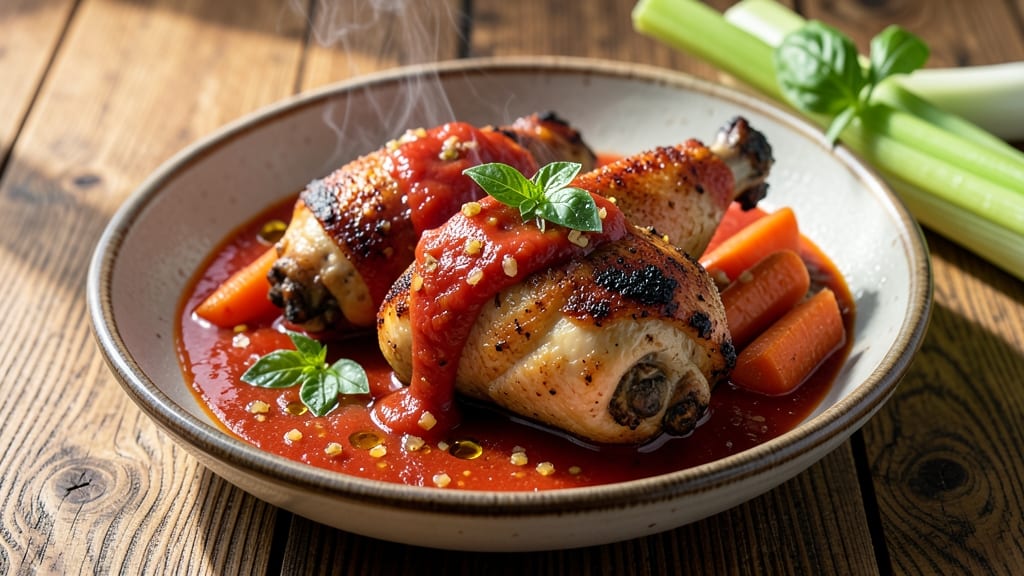
This juicy chicken legs with tomato sauce recipe delivers slow-braised richness that transforms simple ingredients into a restaurant-worthy meal. The secret lies in braising the chicken until fork-tender while simmering a deeply flavorful tomato sauce that clings to every bite.
I developed this method after years of perfecting the balance between tender meat and robust sauce—no shortcuts, just foolproof technique.
The process begins with seasoning the chicken legs generously, then searing them to lock in flavor before slow-braising in a rich tomato base. The sauce develops layers of depth from garlic, herbs, and a touch of sweetness, creating a velvety consistency that coats the chicken perfectly.
What you'll end up with is meat that falls off the bone and sauce so flavorful, it deserves its own bowl.
This dish is designed for weeknight dinners that feel special without requiring hours in the kitchen. The slow cooking method ensures maximum tenderness, while the tomato sauce adds vibrant color and complex flavor.
Serve with crusty bread to soak up every last drop of that luscious sauce, or pair it with roasted vegetables for a complete meal.
Perfect for feeding a family or hosting dinner guests, this recipe scales easily and tastes even better the next day. The key to success is patience—letting the chicken and sauce develop their full potential over time. Let's get started on creating a dish that will become a weekly staple.
Ingredients for chicken legs with tomato sauce
Four juicy chicken legs and simple pantry staples transform into a restaurant-worthy weeknight dinner.
| Ingredient | Amount | Notes |
|---|---|---|
| Chicken Legs (Thigh-Drumstick) 🍗 | 4 whole | Bone-in, skin-on preferred |
| Tomato Sauce (Canned) 🍅 | 2 cups | San Marzano preferred |
| Garlic Cloves 🧄 | 4 cloves | Minced for sauce |
| Yellow Onion 🧅 | 1 whole | Diced, medium size |
| Carrots 🥕 | 2 whole | Peeled, sliced into rounds |
| Celery Stalks 🌿 | 2 whole | Diced, fresh preferred |
| Olive Oil 🫒 | ½ cup | Extra-virgin for richness |
| Dried Oregano 🌿 | 1 tbsp | Or 2 tbsp fresh |
| Dried Basil 🌿 | 1 tbsp | Or 2 tbsp fresh |
| Salt 🧂 | 1 ½ tsp | Kosher or sea salt |
| Black Pepper 🌶️ | ½ tsp | Freshly ground preferred |
| Sugar 🍯 | ½ tsp | Balances acidity |
| Red Wine (Optional) 🍷 | ½ cup | Dry variety preferred |
| Fresh Parsley 🌿 | ¼ cup | Chopped, for garnish |
The chicken legs are the star—look for bone-in, skin-on at Costco or local butchers for the best flavor and texture. Skin-on keeps the meat moist during braising, while bone-in adds depth of flavor. If you can't find bone-in, skin-on thighs will work, but the meat won't be quite as rich. For the tomato sauce, San Marzano cans are worth the splurge—they're sweeter and less acidic, which makes a noticeable difference in the final dish. The fresh herbs (oregano and basil) should be vibrant in color; if they're wilted or dull, they've lost their potency. Store-bought dried herbs in small jars work fine for this recipe, but if you've got fresh, use twice the amount.
No red wine? Substitute with extra chicken broth—just add a splash of balsamic vinegar for depth. The carrots and celery can be swapped for frozen if needed, though fresh has better texture. For the onion, yellow or red both work, but yellow is more traditional. If you're short on time, pre-diced onion and celery mixes from the freezer section save chopping. The sugar is key here—it balances the acidity of the tomatoes and wine, so don't skip it. For a deeper flavor, toast the garlic in the olive oil for a minute before adding it to the sauce—it adds a nutty richness that takes the dish to the next level.
Chicken legs keep best in the fridge for 2 days if not used immediately, but they're even better the next day after the flavors meld. The tomato sauce can be made ahead and reheated—it actually tastes better after sitting overnight as the flavors deepen. Store both components separately in airtight containers. For meal prep, I like to portion the sauce into smaller jars so I can grab just what I need. The herbs can be chopped ahead and stored in the fridge for up to 3 days, though fresh is always best when you're ready to serve.
Why You'll Love This Recipe
- One-Pan Magic: I swear by this recipe when I’m too tired to wash dishes. Toss the chicken legs, diced onion, and sliced carrots straight onto a sheet pan, pour the tomato sauce over everything, and let the oven do the work. Minimal chopping, zero fuss—just pure, hands-off cooking.
- Garlic-Infused Richness: Between us, canned tomato sauce gets a bad rap, but when you simmer it with minced garlic until it’s sticky and fragrant? Suddenly, it’s ridiculously good. The crispy skin on the drumstick-thigh combo soaks up that sauce like a sponge, making every bite taste like it’s been slow-cooked for hours.
- Lunchbox Hero: Here’s what sold me—this dish reheats like a dream. Pack leftovers for work or school, and the sauce stays glossy, the chicken stays juicy, and no one will guess it was made ahead. (Yes, even on a Tuesday night.)
- Budget-Friendly Feast: Chicken legs are my wallet’s best friend—cheaper than breasts, packed with flavor, and this recipe stretches a single bag of drumsticks into four hearty meals. Add a bag of carrots and an onion, and you’ve got a week’s worth of dinners covered without breaking the bank.
Step-by-step instructions for chicken legs with tomato sauce
This method delivers melt-in-your-mouth tenderness with rich, flavorful tomato sauce every time.
Sear the Chicken Legs for Maximum Flavor
Pat the 4 whole chicken legs dry with paper towels—this ensures a better sear. Heat the 0.5 cup olive oil in a large Dutch oven over medium-high heat until shimmering. Place the chicken legs skin-side down and cook undisturbed for 8-10 minutes until the skin turns golden brown and crispy.
Here's the thing—don't move them during the first 5 minutes. This creates that perfect crust while rendering fat that will baste the meat. Once the skin is golden, flip the legs and sear the other side for another 5-6 minutes. Remove the chicken and set aside on a plate, leaving the rendered fat in the pot.
Build the Flavor Base with Aromatics
In the same Dutch oven, add the diced 1 whole yellow onion, sliced 2 whole carrots, and diced 2 whole celery stalks. Cook over medium heat for 8-10 minutes until the vegetables soften and begin to caramelize. This step develops deep, sweet flavors that form the foundation of your sauce.
Stir occasionally, but don't rush this process. You're looking for the vegetables to become tender and develop a golden hue. The reason we wait is that caramelized vegetables add complexity that canned tomato sauce alone can't provide. Add the minced 4 cloves garlic and cook for another 30 seconds until fragrant—don't let it burn.
Deglaze and Simmer the Tomato Sauce
Pour in the 0.5 cup red wine (if using) and scrape up any browned bits from the bottom of the pot with a wooden spoon. This deglazing captures all the concentrated flavors you've built. Let the wine simmer for 2-3 minutes until reduced by half, then add the 2 cups tomato sauce, 1 tbsp dried oregano, 1 tbsp dried basil, 1.5 tsp salt, 0.5 tsp black pepper, and 0.5 tsp sugar.
Stir well to combine, then return the chicken legs to the pot, skin-side up. The sauce should come about halfway up the legs. Bring to a gentle simmer, then reduce heat to low. Cover partially with a lid and let it cook for 45-50 minutes, stirring occasionally. You're looking for the sauce to thicken slightly and the chicken to become fork-tender.
Braise Until Juicy Perfection
After the initial 45-50 minutes, check the doneness of the chicken. It should slide easily off the bone with minimal resistance. If it's not quite there, continue cooking for another 15-20 minutes, covered. The key here is patience—the longer it cooks, the more flavorful and tender the meat becomes.
If the sauce starts to reduce too much, add a splash of water or broth to maintain the proper consistency. The sauce should coat the back of a spoon but still be saucy enough to spoon over the chicken. The chicken is done when the meat reaches an internal temperature of 165°F and the juices run clear when pierced with a knife.
Garnish and Serve
Remove the chicken legs from the sauce and transfer them to a serving platter. Spoon the flavorful tomato sauce over the top and garnish with the chopped 0.25 cup fresh parsley. The parsley adds a fresh contrast to the rich tomato sauce and makes the dish look beautifully finished.
Serve immediately with crusty bread or over polenta to soak up that delicious sauce. Each bite should deliver perfectly tender, juicy chicken with a crispy skin and a sauce that's rich, slightly sweet, and packed with herbaceous flavor. This is where the magic happens—simple ingredients transformed into a restaurant-quality dish.
Pro Tips For Making Chicken Legs With Tomato Sauce
- SEAR THE SKIN FIRST: Don’t skip browning those chicken legs—high heat for 6-8 minutes per side until the skin is deep golden (not just pink). I used to rush this, and the sauce would always taste flat. The Maillard reaction here is non-negotiable for flavor.
- CHOP ONIONS THIN: Dice that yellow onion into paper-thin slices—1/8-inch or less. Thicker pieces turn mushy in tomato sauce, and you’ll end up with a watery mess. My grandmother swore by this, and she was right: they melt into the sauce without disappearing.
- SIMMER NOT BOIL: Once the sauce is added, keep the heat at a gentle simmer (tiny bubbles, occasional swirls) for at least 45 minutes. Boiling will turn the sauce into glue and make the chicken dry. I learned this the hard way—now I set a timer and ignore the pot.
- ADD CARROTS LAST: Toss the carrots in only after the chicken has cooked 30 minutes—this keeps them crisp-tender, not soggy. If you add them early, they’ll dissolve into the sauce like overcooked pasta. Sounds weird, but it works: bright orange bits, not mush.
Wine and beer pairings for these flavors
Italian Red Wine
A bold Chianti Classico or Sangiovese from Tuscany is my go-to pairing—its bright acidity and cherry notes complement the tomato sauce beautifully while standing up to the rich chicken.
Look for a 2018-2020 vintage with 12-14% ABV to balance the dish without overpowering it. The tannins cut through the sauce's richness, creating a perfect harmony. 🍷
Medium-Bodied Reds
If you prefer something slightly lighter, a Montepulciano d'Abruzzo or Valpolicella offers juicy dark fruit flavors that pair wonderfully with the dish's herbal notes. These wines have enough body to match the chicken's richness but remain approachable.
I recommend chilling them slightly (55-60°F) to refresh your palate between bites.
Crisp White Wines
For a refreshing contrast, try a Vermentino from Sardinia or a Fiano from Campania. Their citrus and mineral notes cleanse your palate while still complementing the tomato sauce's acidity. A chilled 2021 vintage with 13% ABV works perfectly, especially on warm evenings.
Beer Pairings
A Sicilian amber ale like Birra del Borgo or a Belgian-style witbier provides a crisp, slightly spiced alternative. The malt sweetness in amber ales balances the tomato sauce's acidity, while witbiers' coriander and citrus notes create an unexpected but delightful contrast. Serve both at 45-50°F for optimal flavor.
Non-Alcoholic Options
For a mocktail that matches the dish's complexity, mix ½ cup sparkling water, 2 oz tomato juice, 1 oz fresh lemon juice, and a pinch of salt. Garnish with a basil leaf—this refreshing drink mirrors the sauce's herbal brightness without alcohol. 💛
Serving Temperature
Wine should be served at 60-65°F for reds and 45-50°F for whites to enhance their aromas and flavors. Beer works best at 45-50°F—too cold dulls the malt complexity. I always chill my wine for 15-20 minutes before serving to achieve the perfect temperature without sacrificing flavor.
Nutrition facts
Frequently asked questions
Can I use chicken thighs instead of whole legs?
Yes, you can substitute bone-in, skin-on chicken thighs for the legs, but the cooking time will differ. Thighs cook faster—aim for 30-35 minutes after searing instead of 45-50 minutes. The skin-on method still works perfectly, and you'll get that same crispy texture and juicy meat. Just check for doneness at 165°F internal temperature.
How do I make the sauce thicker or thinner?
For a thicker sauce, simmer uncovered for 10-15 extra minutes to reduce it naturally. If it's too thick, add 1-2 tablespoons of water or chicken broth at a time while stirring. For a thinner sauce, simply add more broth or a splash of red wine. The key is to adjust gradually—too much liquid too fast can dilute the flavor.
What's the best way to reheat leftovers?
Reheat gently in a skillet over low-medium heat with a splash of water or broth to prevent drying. Cover and cook for 5-8 minutes until warmed through. Avoid microwaving—it makes the sauce watery and the chicken rubbery. The slow reheating keeps everything juicy and flavorful.
Can I make this recipe in a slow cooker?
Sear the chicken as directed, then transfer everything to a 6-quart slow cooker. Cook on Low for 6-7 hours or High for 3-4 hours. The slow cooker method is perfect for hands-off cooking, and the chicken will be even more tender. Just add ½ cup water if the sauce seems too thick during cooking.
Why did my chicken turn out dry?
Overcooking is the most common cause—chicken legs need patience! Always check for 165°F internal temperature. Another reason could be not searing properly or using bone-in, skin-off pieces. For next time, try adding 1-2 tablespoons of broth or water to the pan when reheating to restore moisture. The skin acts as a natural seal to keep juices in, so keep it on!