
Main Courses
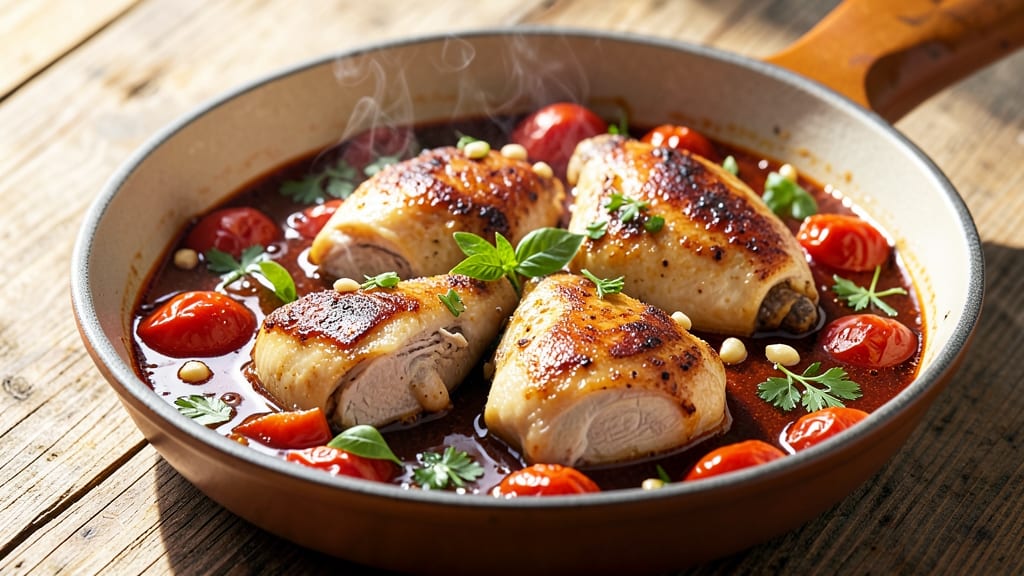
Ina Garten’s chicken cacciatore transforms a simple one-pot dish into a restaurant-worthy centerpiece with just a few refined techniques. The secret lies in properly searing the chicken and deglazing the pan—steps that unlock layers of savory depth without requiring advanced skills.
I’ve recreated this recipe countless times, and the difference between home-cooked and restaurant-quality lies in these precise moments.
This elegant dish begins with chicken thighs, browned until golden, then simmered in a rich tomato-wine sauce with garlic, herbs, and pantry staples like canned tomatoes and olives.
The key is patience: letting the sauce reduce slowly while the chicken becomes fork-tender, creating a sauce thick enough to coat every bite. No special ingredients are needed—just thoughtful timing and a well-stocked pantry.
What you’ll end up with is a one-pot masterpiece: tender chicken swimming in a glossy, aromatic sauce with just the right balance of acidity and richness. The dish pairs beautifully with crusty bread to soak up every last drop or alongside polenta for a heartier meal.
Serve with a glass of Chianti for the full Italian experience—this recipe delivers restaurant elegance without the fuss.
The beauty of this method is its flexibility: swap white wine for broth if needed, adjust the acidity with a pinch of sugar, or add a splash of cream at the end for extra richness.
It’s the kind of dish that feels special but remains approachable for weeknight dinners. Let’s get cooking!
Ingredients for ina garten chicken cacciatore
Pantry staples meet Italian elegance in this one-pot masterpiece—where simple ingredients transform into restaurant-worthy flavor.
| Ingredient | Amount | Notes |
|---|---|---|
| Chicken Thighs, Bone-In 🍗 | 1 ½ lb | Skin-on, cut into even pieces |
| Extra-Virgin Olive Oil 🫒 | ½ cup | High-quality, fruity variety preferred |
| Garlic Cloves 🧄 | 6 cloves | Peeled, thinly sliced |
| Canned San Marzano Tomatoes 🍅 | 28 oz | Whole, crushed by hand |
| Dry White Wine 🍷 | ½ cup | Sauvignon Blanc or Pinot Grigio |
| Chicken Stock 💧 | 1 cup | Homemade or high-quality store-bought |
| Fresh Rosemary 🌿 | ¼ cup | Finely chopped, stems removed |
| Fresh Thyme 🌿 | ¼ cup | Leaves only, finely chopped |
| Pitted Kalamata Olives 🫒 | ½ cup | Sliced, for garnish and flavor |
| Capers 🍈 | 1 tbsp | Rinsed if packed in brine |
| Red Wine Vinegar 🍋 | 1 tbsp | For acidity balance |
| Granulated Sugar 🍬 | ½ tsp | To offset acidity |
| Diamond Crystal Kosher Salt 🧂 | 1 ½ tsp | For seasoning and deglazing |
| Freshly Ground Black Pepper 🌶️ | ½ tsp | Coarsely ground |
| Fresh Parsley 🌿 | ¼ cup | Chopped, for garnish |
The chicken thighs are non-negotiable—bone-in, skin-on delivers the richest flavor and juiciest texture. Whole Foods or your local butcher often carry high-quality cuts, but any reputable grocery store will have them. Look for thighs with good marbling and vibrant color—avoid any that smell off or appear slimy. The skin should be intact and golden, not grayish. For the wine, Trader Joe's carries excellent Sauvignon Blanc at a reasonable price, but any dry white will work. The tomatoes? San Marzano is ideal, but any high-quality canned tomatoes will suffice if that's what you have on hand.
No white wine? Chicken stock plus a splash of red wine vinegar mimics the acidity beautifully. Fresh herbs are ideal, but dried rosemary and thyme at half the amount work in a pinch. The olives and capers add briny depth—if you're avoiding salt, reduce the kosher salt by half. For extra richness, stir in 2 tbsp heavy cream at the end. The sugar is crucial—it balances the acidity from the tomatoes and vinegar, creating that perfect harmony. If you're using pre-minced garlic, toast it in olive oil for 30 seconds first to deepen the flavor.
This dish tastes even better the next day as the flavors meld, so plan ahead. Store leftovers in an airtight container in the fridge for up to 5 days or freeze for 3 months. The sauce thickens as it cools, so a splash of water or stock can restore its consistency when reheating. For meal prep, portion into individual containers—each serving makes a complete meal with crusty bread. The herbs and olives can be added fresh when serving to keep their vibrant color and texture.
Why You'll Love This Recipe
- One-Pan Magic: I swear by this recipe because it’s literally one pan, one spatula, and zero stress. The bone-in thighs crisp up while the tomatoes and wine simmer down—no fancy techniques, just good ingredients doing their thing.
- Wine & Garlic Kiss: That splash of dry white wine cuts through the richness, and the garlic? Oh, it’s roasted in the olive oil until it’s sweet and fragrant, not sharp. The San Marzano tomatoes add depth without overpowering—it’s the kind of flavor that makes you pause mid-bite.
- Lunchbox Hero: Between us, this tastes even better the next day. Pack it in a jar with crusty bread, and suddenly you’ve got a meal that’s actually worth bringing to work. (Yes, even on a Tuesday.)
- Budget-Friendly Feast: Bone-in thighs stretch for miles, and canned tomatoes + wine make this cheaper than takeout. I’ve fed four people for under $15, and no one ever complains—especially when the leftovers reheat like a dream.
Step-by-step instructions for one-pot tomato-braised chicken
A rich, aromatic dish that delivers deep flavor with minimal cleanup—just one pot and careful layering.
Sear the Chicken Thighs for Depth of Flavor
Heat a large, deep skillet or Dutch oven over medium-high heat until hot. Add the 0.5 cup extra-virgin olive oil and swirl to coat the bottom evenly. Working in batches if needed, add the 1.5 lb chicken thighs, bone-in skin-side down. Press gently with a spatula to ensure full contact—this prevents curling and creates a golden crust.
Sear undisturbed for 5-6 minutes until the skin turns deep golden brown and crispy. Flip the thighs and sear the other side for another 4-5 minutes. Remove the chicken and set aside on a plate, leaving all the rendered fat in the pot. This step builds the foundational flavor—don't skip it, even if it feels time-consuming.
Build the Aromatic Base with Garlic and Herbs
In the same skillet, reduce heat to medium and add the 6 cloves sliced garlic. Cook for 30 seconds until fragrant—this prevents burning. Add the 0.25 cup finely chopped fresh rosemary and 0.25 cup finely chopped fresh thyme, stirring for 1 minute until the herbs release their oils and perfume the pot.
Deglaze immediately by pouring in the 0.5 cup dry white wine, scraping up all the browned bits from the bottom with a wooden spoon. Let the wine simmer for 2-3 minutes until reduced by half. This step extracts maximum flavor from the chicken's sear and creates a velvety base for the sauce.
Simmer the Tomato-Herb Sauce
Add the 28 oz crushed canned San Marzano tomatoes, 1 cup chicken stock, 1 tbsp red wine vinegar, 0.5 tsp granulated sugar, 1.5 tsp diamond crystal kosher salt, and 0.5 tsp freshly ground black pepper to the skillet. Stir well to combine, then return the chicken thighs to the pot, skin-side up.
Bring to a gentle simmer, then reduce heat to low and cover partially. Let it cook for 45-50 minutes until the chicken is tender and the sauce has thickened. The thighs should pull away from the bone with slight resistance. Here's the thing—don't lift the lid during cooking. Every time you peek, you lose heat and moisture, extending the cooking time unnecessarily.
Finish with Briny Olives and Capers
Uncover the pot and increase heat to medium. Add the 0.5 cup sliced pitted kalamata olives and 1 tbsp rinsed capers, stirring gently to distribute them throughout the sauce. Simmer uncovered for 5-7 minutes to allow the liquid to reduce slightly and the flavors to meld. The sauce should coat the back of a spoon with a glossy sheen.
Taste and adjust seasoning—you might need a pinch more salt or a splash of red wine vinegar to balance the acidity. The olives and capers should be warm but not disintegrated. This final step adds the signature briny contrast that makes cacciatore shine.
Rest and Garnish for Presentation
Transfer the chicken thighs to a serving platter and tent loosely with foil. Let them rest for 5 minutes while you skim any excess fat from the sauce. Ladle the sauce over the chicken, then garnish with 0.25 cup chopped fresh parsley. The resting period ensures the juices redistribute, making each bite impossibly tender.
Serve immediately with crusty bread or over polenta to soak up every last drop of that rich, herb-infused tomato sauce. The dish should smell like a Tuscan countryside—aromatic, slightly tangy, with layers of garlic, rosemary, and thyme. This is where one-pot cooking truly excels—minimal effort, maximum reward.
Pro Tips For Making Ina Garten Chicken Cacciatore
- Sear the Thighs Like It’s 1950: Cast iron on high heat until the oil shimmers like a summer road—this isn’t the time to skimp. Press those bone-in thighs down hard for 6-8 minutes per side until the skin turns golden and crispy, not just brown. I learned this the hard way when I rushed it and ended up with soggy, flavorless chicken. The crust is what carries the sauce, so don’t rush it.
- Deglaze with Wine Immediately: As soon as you remove the chicken, pour in that dry white wine and don’t let it evaporate—scrape every last bit of browned goodness from the pan with a wooden spoon. This is where the magic happens: the wine lifts the caramelized bits that make the sauce taste like it simmered all day. Skip this, and you’re left with a flat, one-note dish.
- Crush Garlic Like a Boss: No mincing, no chopping—crush those garlic cloves with the flat side of your knife first, then add them whole to the pan. They’ll soften and infuse flavor without burning, giving you that deep, sweet garlic aroma Ina Garten swears by. I was skeptical until I tried it—now I never go back.
- Simmer Tomatoes Low and Slow: After adding the San Marzano tomatoes, reduce the heat to a bare simmer (think tiny bubbles, not rolling) and cover the pot. This keeps the sauce from breaking down into a watery mess. I used to crank the heat, and the tomatoes would turn to mush—now I let them cook gently for at least 45 minutes, and the result is rich, jammy, and worth the wait.
Common mistakes when making your ina garten chicken cacciatore
Skipping the Sear
This is the #1 mistake I see—skipping the sear or rushing it. The golden crust on the chicken skin is what locks in flavor and creates that restaurant-quality texture. If you skip it, your dish will taste flat and watery.
Use a heavy-bottomed Dutch oven like Le Creuset to ensure even heat distribution. Press the chicken thighs gently with a spatula to prevent curling, and let them sear undisturbed for at least 5-6 minutes per side. 🔥
Overcrowding the Pan
Adding too many chicken thighs at once causes steaming instead of searing, leading to pale, soggy skin. Work in batches if needed—your pan should only hold 2-3 thighs at a time without crowding.
This ensures maximum contact with the hot surface, creating that crispy, flavorful crust. I’ve made this mistake too—trust me, patience here pays off. ⚡
Ignoring the Deglaze
The deglazing step is where 80% of the flavor comes from. If you skip scraping up the browned bits with wine, you’re missing out on layers of umami richness. Use a wooden spoon to scrape every last bit from the bottom—this creates a velvety base for your sauce.
If you’re in a hurry, don’t rush this step; let the wine reduce by half before moving on. 💡
Peeking Too Often
Every time you lift the lid during simmering, you lose heat and moisture, extending cooking time and potentially drying out the chicken. Cover the pot and only check the internal temperature of the chicken with a meat thermometer—it should reach 165°F.
I’ve ruined perfectly good cacciatore by peeking every 5 minutes out of anxiety. Resist the urge! 🌡️
Underseasoning the Sauce
Many home cooks hold back on salt or acidity, but cacciatore needs bold flavors. Taste your sauce before serving—you might need an extra ½ tsp kosher salt or ½ tsp red wine vinegar to balance the tomatoes.
The olives and capers add brininess, but don’t rely on them alone. Adjust gradually, as sauces often need more seasoning after resting. 🧂
Overcooking the Chicken
Chicken thighs are forgiving, but overcooking turns them dry and stringy. Use a meat thermometer to check for 165°F internal temperature—they’ll continue cooking slightly while resting.
If your sauce reduces too quickly, add ¼ cup chicken stock to maintain moisture. I’ve learned the hard way that low and slow is key here. 💫
Nutrition facts
Frequently asked questions
Can I use chicken breasts instead of thighs?
While possible, thighs are ideal for cacciatore—they stay juicy during long simmering while breasts can dry out. If using breasts, cut them into 1-inch pieces, sear quickly (3-4 minutes per side), and reduce simmering time to 25-30 minutes. For best results, marinate breasts in olive oil, garlic, and herbs for 30 minutes before cooking.
What if I don't have white wine?
No problem! Replace the ½ cup white wine with ½ cup chicken stock plus 1 tbsp red wine vinegar. For extra depth, add ½ tsp dried oregano or a pinch of Worcestershire sauce. The acidity remains balanced, and the dish won't miss the wine's flavor.
How do I make this dish ahead of time?
Cacciatore tastes even better the next day! Let it cool completely, then store in an airtight container in the fridge for up to 5 days. Reheat gently on low heat, adding 2-3 tbsp chicken stock if the sauce thickens too much. For freezing, portion into meal-sized containers (sauce may separate—stir before reheating).
Can I make this in a slow cooker?
Sear the chicken first in a skillet, then transfer everything to a 6-quart slow cooker. Cook on LOW for 6-7 hours or HIGH for 3-4 hours. The skin may not get as crispy, but the chicken will be tender and flavorful. Add olives and capers in the last 30 minutes to prevent overcooking.
What's the best way to serve this dish?
Pair with crusty Italian bread for soaking up sauce, or serve over creamy polenta for a heartier meal. Garnish with extra parsley and lemon wedges for brightness. A glass of Chianti or sparkling water with lemon complements the dish perfectly. For a complete meal, add a simple arugula salad with lemon vinaigrette.